



Real advice from people who've done the work.
Advice grounded in experience from the experts inside 13,000+ businesses.
Everything we publish comes from people who are actually doing this work. You won't find generic business advice here. You'll find specific, useful content from finance leaders, HR directors, marketing experts, and turnaround specialists who bring real experience to businesses like yours.




All Insights
Explore by Category

5 Tips for How to Improve Your Financial Reporting Processes and Controls
How are your day-to-day financial operations? Do you have the processes and controls in place to succeed? These 5 points will help you gauge your current financial setup, and how to improve financial reporting processes and controls for your business.
Processes
- Ensure accurate, reliable, & timely financials: If your financials are inaccurate, poor decision-making will follow. When deployed and understood correctly, your financial statements can create a competitive advantage.
- Create short-term cash forecasts: Even healthy businesses can run into issues if they are not carefully tracking cash flow. A good cash forecast will help your business plan for upcoming capital needs well in advance.
- Fully review financials and identify deficiencies: Don’t fall behind on reviewing your financial reports. Figure out where you’re lacking in your KPIs and make any necessary adjustments.
Controls
- Design a scalable chart of accounts and financial reporting: A well-organized chart of accounts can help the end users of the financial statements better understand and operationalize results.
- Identify financial risks and make plans to address them: Businesses encounter many risks. Employee, tax, and product risks can often be avoided when they are identified and addressed in advance.
Ampleo is here to help you with your financial planning process needs. If you find that you need help with strategic guidance on processes or controls, our financial experts can be your guides. Reach out today.

5 Ways to Invest in a Solid Team Structure
1. Communicate Strategies to Your Team
Strategy can reasonably be boiled down to the timely alignment of resources and structure of a team. Communicating strategies and expectations from the start are vital in aligning teams to accomplish a common goal and creating an ideal team structure and culture of accountability.
2. Treat People as Your Most Valuable Asset
Remember, the hearts and minds of your people are “the” key resource in your company. Every person has a unique background, perspective, and experience. Encourage your employees to value, respect, listen, understand, and learn from others’ perspectives. As individuals feel valued for their unique abilities and backgrounds, they are able to contribute towards developing a unifying culture and creating innovative solutions for your company.
3. Create a Culture of Accountability
Everyone wants their organization to be filled with accountable employees. To obtain this, business results are shared, discussed, and understood by everyone. When a mistake is made, the response is focused on solving the problem and learning from the mistake rather than pointing fingers and making accusations. When employees feel a sense of ownership for organizational results, they will take individual responsibility and accountability to achieve them.
4. Learn, Align, and Apply Individual Team Member’s Strengths
Time and effort are usually best spent aligning and applying individual strengths. Investing in this area usually requires; 1) a shared understanding of those strengths; and 2) a system (structure, process, and context) to timely and efficiently apply those strengths. Knowing one’s strengths can provide a better understanding of how one personally impacts the team and where one can contribute the most. Here are some tools that help identify strengths: Clifton Strengths Finder and Myers Briggs Personality Test.
5. Provide Tools to Increase Effectiveness
There are many tools you can provide your teams to help make them more effective. These can be both job-specific tools and general tools. Both types will help employees work most effectively. Some resources we have found to help teams become more effective decision-makers and to help stay engaged at work are Z-Model (Myers Briggs applied), Gallup 12 Questions, Traction/Entrepreneur Operating System (EOS)
To conclude, investing in a solid team structure by communicating strategy, putting people first, creating a culture of accountability, aligning and applying strengths, and providing tools to increase effectiveness will always yield great results.

Why Should I Hire A Fractional CMO? [The Valuable Role of a Fractional CMO Within an Executive Team]
Marketing leadership and execution within any organization cannot be overstated. When done well, marketing has the potential to take your business to new heights, driving revenue and solidifying your brand’s position in the market. In such a competitive landscape, having a CMO at the executive level is almost a given. But it doesn’t have to be a traditional full-time head. If you’ve ever asked “Why should I hire a fractional CMO?” before, then you’ve come to the right place. Fractional leadership has many benefits and is proven to be effective and less expensive.
A Unified Effort
The goal of most executive teams is to have finance, marketing, and HR at the forefront of every operation, with sales and operations teams working in harmony. Companies tend to be more efficient when this happens, leading to swifter goal attainment across all areas. This is why a fractional CMO’s leadership is no different.
The Fractional Model
Similar to a full-time finance, marketing, or HR head, fractional executives bring seasoned leadership to the executive table, although on a part-time basis. Fractional CMOs, in particular, can bring veteran marketing leadership and help to develop and execute strategic plans that align with your business’s broader goals. This helps propel the company forward in every aspect, even in the most challenging market conditions.
A fractional CMO’s approach to marketing is driven by the needs and vision of the business’s other executives, primarily the CEO and board members. Starting with this vision can help a fractional CMO in creating the perfect digital marketing mix that is data-driven and result-oriented. When everyone at the table, whether full-time or fractional, is on the same page, deliverables and organizational goals align with the company’s needs, and together, they drive maximum revenue.
By involving a fractional CMO at the executive level to support an existing marketing team, organizations can enjoy greater visibility into their marketing efforts. Across all departments and levels of management, everyone can work collaboratively, sharing insights and opinions to help achieve the best possible results. Better yet, this can be done without paying a hefty full-time salary + benefits. With a fractional CMO, you pay only for the hours that you need while receiving seasoned marketing leadership.
Ampleo specializes in providing experienced fractional leadership, including fractional CMOs. With a tailored approach, a part-time CMO from Ampleo can provide leadership, expertise in the latest marketing trends, management of your existing marketing team, and can help you navigate the challenges of modern marketing and come out ahead. Learn more about why fractional CMOs add more to your executive team, and how they can help you improve efficiency, drive returns, and solidify your marketing momentum and success.
![Why Is It Important To Know Your Target Audience? [& How It Can Help Achieve Business Success]](https://cdn.prod.website-files.com/6a6ca9c4de3fbc1c80b5f90d/6ab3f74a7e2a5888aff64cc4_AdobeStock_198344971-scaled.jpeg)
Why Is It Important To Know Your Target Audience? [& How It Can Help Achieve Business Success]
To succeed in business, it’s essential to have a clear understanding of who your target audience is. Whether you’re overseeing a small startup or a large corporation, understanding your audience can help you create personalized content, build relationships, and acquire new customers.
Why Is A Target Audience Important?
Identifying your target audience is crucial for any marketing plan. Understanding customers’ preferences, pain points, and interests is essential in creating engaging content that resonates with them. By thoroughly researching your target market, you’ll better understand how to approach and fulfill their needs and wants.
How It’s Done
Researching a client’s target audience goes far beyond simply identifying demographic information. Your marketing team should get to know each target group by developing detailed personas based on their characteristics and psychographics. This includes their likes and dislikes, hobbies, income, workplace, home habits, and pain points. Often the best way to learn this information is by interviewing actual customers, asking thoughtful questions, and gleaning insights from their responses. In many cases, you may stumble upon pain points and solutions to those that you had never considered, and your personas become richer and deeper as a result.
By developing comprehensive persona profiles, you will better understand what drives any particular audience group. With this knowledge, you can create products and services that speak to the audience emotionally, resulting in a game-changing approach that leads to better marketing success.
Overall, the key to successful marketing is gaining a clear understanding of who your audience is and how you can add value to their life. By identifying detailed personas, measuring lifestyle habits and activities, and identifying the problems that your product or service can address, you can better craft a strong marketing strategy that resonates with your customers’ needs and interests.
With a fractional CMO from Ampleo, you’ll know exactly why it is important to know your target audience. Together, we will clearly identify your target audience and take your marketing strategy to the next level. Learn more about our solutions and start unlocking a wealth of opportunities that help your business grow and expand.
Schedule a free consultation call today!

What Is Insolvency?
A company is deemed to be insolvent when a company cannot pay the financial debts owed to creditors when they become due (cash flow insolvency); or when a company’s total liabilities exceed its assets (balance sheet insolvency).
Insolvency can arise from many situations, such as:
- Poor cash management;
- A reduction in revenues;
- An increase in expenses;
- Unexpected events such as litigation; and
- Change in market conditions.
What Can Companies Do When They Become Insolvent?
When a company cannot pay its debts when they become due, it may attempt to arrange a financial compromise, like paying an agreed-upon lesser amount over a period of time, or consolidate debts with more favorable terms.
If a debtor and creditor(s) can’t agree on a repayment arrangement, it may require court intervention, which can be initiated by either the debtor or a creditor. When this situation arises, a debtor may have to liquidate assets to pay outstanding debts.
What Should You Do When Facing Insolvency?
If your business is facing insolvency, you can consider restructuring the debt or proposing a repayment plan. However, if you want to avoid the risk of losing your assets, you must reach an agreed-upon compromise with your creditor(s). The fewer creditors a company has, the easier this is to accomplish. In most situations, it is best to attempt to consolidate debts as much as possible to give the negotiations a greater chance of success.
What Are the Two Types of Insolvency?
The two main types of insolvency include cash-flow and balance-sheet insolvency.
Cash-Flow Insolvency
Cash-flow insolvency occurs when an entity cannot pay its debts when they become due.
Balance-Sheet Insolvency
Balance-sheet insolvency describes an entity where liabilities exceed assets. In other words, the company is said to have a negative net worth.
Navigating an insolvent company is a complicated process. Further, the fiduciary duties of the management team and board of directors change when a company is in the zone of insolvency. As a result, a company in either a cash flow or balance sheet insolvent situation should consult with a professional to help them successfully navigate a successful outcome.
You Might Also Like
What Is Turnaround Management? 5 Steps To Improve Your Process Of Cash Management How to Manage & Improve Cash Flow for Small Business

How To Think About and Implement Technology in Business
The most common mistake in buying and implementing technology in business is assuming technology will solve problems that are being caused by processes – or the lack thereof.
I worked at General Electric from 1998-2002 when Lean Six Sigma (LSS), a method that relies on a collaborative team effort to improve performance by systematically removing waste and reducing variation, was becoming a big deal under Jack Welch. The LSS way had become a “religion” and the concepts I learned became second nature. I quickly learned that if there are defects in a product or service, it is almost always because of a breakdown in the process – or the lack of one. It is very common, however for managers to think that software will “fix it” when that may not be the case.
While working for a global company that had manufacturing and distribution in over 23 countries, we were able to solve big problems with little to no technology. One of the business units in southeast Asia was losing over $500,000 per year in unaccounted-for inventory loss. This was not the only market experiencing similar issues. At ‘corporate’ there was a lot of discussion around new add-on software for managing warehouses. Each of them was expensive and would take time and effort to implement new technology and train the workforce. Some members of management were even advocating for very expensive ERP systems, priced in the millions.
To make a long story short. I went to the business unit and observed their operating process for handling inventory and how it flowed through the warehouse. Over a weekend, we redesigned the process and with less than $25.00 dollars (tape, plastic envelopes, other supplies) we were able to design a process that improved inventory accuracy by over 99.9%, and the losses in inventory dropped to less than $200 a month. This revised process could still be improved but the improvements needed were able to be added through the software the company already used.
Below are a few concepts from Lean-Six-Sigma as it relates to using technology and that we used to solve the issues:
- The right process will produce the right results.
- Implement only reliable, thoroughly tested technology that serves your people and process.
- First, work out the manual process, and then automate it.
- “Genchi Genbutsu” (“go look, go see”)
These concepts are effective – not just in the operations side of a business but in the strategy and decision-making process as well.
Strategy and Decision Making
I would argue that the most important process that a company has is the ‘Strategy & Decision Making process. This process is the combination of strategy development, business planning, monitoring, and the following short-term and long-term decisions that the senior management team makes. This loop moving from strategy to execution to monitoring/reporting, and back to strategy on a continual basis is the key process within any organization. Just like with operational problems (like the inventory/warehouse problem above) there is a temptation for management to throw technology at the process hoping that it will improve the outcomes.
Using the principles of Lean Six Sigma and applying them to the Strategy & Decision-Making process, I recommend that senior leadership teams do the following as they develop their information systems:
- Design the right process for developing and executing your business strategy.
- Identify what the key operating activities are that your strategy depends on and that create value.
- Identify what information is needed (less is more) to monitor results on a quick feedback loop. (I.e., daily, monthly, quarterly).
- Develop a manual information system process (i.e., Excel, etc.)
- Execute several strategy-execution-feedback cycles on the ‘manual’ system before identifying and implementing technology in your business to further automate the process.
- Identify the right technology for simplifying and automating the information flow.
- Test the new technology.
- Implement technology in the business quickly.
By following this process, a senior leadership team can avoid or minimize the problems that come from trying to solve problems with technology that are driven by a broken process. Many senior leaders will unconsciously push off the hard job of strategy and execution by focusing on the mechanics and tools of information flow. It is better to move quickly and keep focused on strategy and execution by developing the right process – supported by simple temporary manual processes – than to get distracted with technology and implementation.
If you need help assessing the technology and processes in your organization reach out to Ampleo. Our professionals are ready to step in and help your business reach its full potential.

Strategic Financial Planning: Bridging the Gap From Here to There
Just like planes are typically flown by a pilot and co-pilot, businesses are usually led by a CEO and CFO. The CEO sits in the driver’s seat and the CFO is in the passenger seat. The CEO sets the strategic priorities for the organization while the CFO makes sure that there is a plan and resources in place to support those business strategic priorities. In this article, we will cover three areas that will help improve your financial strategy: creating a strategic financial plan, tracking important KPIs, and forecasting cashflows.
1) Creating a Financial Plan
Before a plane takes off it has a flight plan. A flight plan consists of important details such as departure and arrival points, estimated time in route, alternate airports in case of bad weather, type of flight, number of people on board, etc. In a similar way, a good financial plan has data points that can be tracked such as revenue, number of employees, churn rates, product milestones, cash flow, and profitability.
Financial plans should also assume not everything will go exactly to plan. Occasionally the organization won’t get traction on an important initiative and will need to pivot. Improving your organization’s ability to assess risks will improve its ability to react and adapt as needed.
It is also important for the organization’s strategy to be integrated into the financial plan. This can be achieved by focusing on key initiatives that support your organization’s overall objectives. There are many “good” areas an organization can focus on, but success typically increases as energy is focused on key initiatives.
2) Tracking Key Performance Indicators (KPIs)
After a financial plan is created it is important to track progress. This is first accomplished by defining the key performance indicators (KPIs) within your organization. After KPIs within the financial function have been identified, it is important to determine how frequently your organization will look at each number (ex: daily, weekly, monthly, or quarterly). The budget vs actual process can be used as a report card for the organization and help your team better understand if you are executing your financial plan or if adjustments or corrections are needed. In the words of Peter Drucker, widely known as one of the fathers of modern business management, “If you can’t measure it, you can’t improve it.”
3) Creating a 13-week cash forecast
A plane can have a perfect flight plan, pilot, and co-pilot. However, without fuel, a plane can’t reach its intended destination. In a similar way an organization can have a great plan and leadership in place, but without appropriate capital will have a difficult time reaching its destination. A successful financial strategy will ensure the organization has appropriate capital to support its objectives. This can be achieved by creating a cash forecast. Cash forecasts should consider cash inflows and outflows. It is important to remember that “cash flow” is not the same thing as “profitability”. Cash inflows can include customer payments, investments received, and loan proceeds. Cash outflows can include the paydown of debt, investment into inventory, and owner distributions. Understanding the timing of large cash flow items will help ensure that your organization has time to ensure it has adequate cash versus reacting last minute when the account balances get low.
How Ampleo Can Help
Strong strategic financial planning can drastically improve your business’s odds of success. An experienced CFO will lay the groundwork to help your business execute its strategic objectives. At Ampleo we help businesses create strong financial plans, establish KPIs, and track cash flows to support their business’s objectives. We believe that financial strategy is key to executing The Five Elements of Financial Success.

![What is Capital? [& What Type of Capital is Best for You]](https://cdn.prod.website-files.com/6a6ca9c4de3fbc1c80b5f90d/6ab3f7a953486ec07462eac3_AdobeStock_480310565-scaled.jpeg)
What is Capital? [& What Type of Capital is Best for You]
We all experience the relationship process as we sojourn through our lives. We start out as babies, evolve into childhood, and into adolescents. Through all these stages, we have amazing moments of growth opportunities as well as moments of struggle and hardship. At some point in this journey, we look for a partner, someone who we mesh well with and who will provide us with love and support throughout our life. We hope to have a reciprocal relationship and provide this partner with the same love and support they show us.
As I thought about this, it really made me consider the relationships we have in business; those short-term and sometimes long-term relationships that help us build up our respective dreams. In turn, we help those that invest in our growth and progress. As business owners in those early stages of adulthood, we are trying to make it on our own and fund our own organic growth. But at some point, we realize we can’t take it to that next stage without a partner.
Types of Capital
There are two types of capital that your business can attract, and each has its benefits and drawbacks. This decision is critical for the future progression and goals of your business and should be analyzed with a very sophisticated approach.
Debt
Just as we date our potential spouse in our relationship journey, we can similarly create a relationship with a banking partner. This is an arrangement that is normally short-term in nature and does not grant any long-term equity position. The debt may be very short such as a line of credit or a term loan. Or there can be a longer-term commitment such as a commercial mortgage or an SBA loan. It is important to note that debt financing typically has more stringent requirements on repayment with conditions and covenants. The banks want to ensure that you are a safe bet (just like in the dating world) and will often require a personal guarantee and/or a first position on the assets of your company. Even though the banks provide a few more requirements on their required provisions, they are a cheaper alternative to capital than an equity option.
Equity
In relationship terms, equity = marriage. When you are seeking to have an outside party come in and take partial ownership of your business, it is key that you are actively searching for partners that will help you succeed. Ideally, they will be a strategic source for that growth. Whether it’s “friends and family”, an angel investor, or a VC, the search for the ideal fit will be either a blessing or a major headache for the future of your business. Just as you as a business owner are looking to attract the right kind of investor, the investor is looking at you and your business’ risk profile. “Is this a business that will grow quickly and give me strong returns?”. “What sort of risk am I taking with this potential investment, and should I mitigate my risk by taking a larger part of the company and taking an active role in the operations?” These are important questions as a business owner you will need to consider. How much control do you want to give up? How strategic is your potential investor and can they help you with more than just capital? Should I consider debt vs equity, or can I grow the business from earnings?
Let Us Help You
Throughout the process of deciding on your capital structure, it is critical to have the guidance of a trained professional. Relying on a CFO that has been through this process before and knows what to look out for will save you from entering a less-than-satisfactory relationship. Guidance on the amount of debt and/or equity to take on, how to attain it, and who to speak with is the kind of help you need. We recommend that your financial partner has the following skills to facilitate the preparation, introductions, and relational expertise to deal with lenders and equity holders post-close.
- Understanding of the broader market and potential risks of your business
- Financial modeling skills to help project your business’s future goals
- The ability to communicate effectively with investors and management
- Honest and hard-working
- Reliable
- Strategically minded and able to navigate a continually shifting environment
Here at Ampleo, we are a group of entrepreneurial, strategic thinkers who love to work through the issues that help our clients succeed and grow. Raising capital is so important and having a trusted advisor to help navigate and coordinate that process relieves a lot of stress from the businesses we’ve helped. This is the final key to the 5 Elements to Financial Success, and quite possibly, the most important.

What Is a Purchase Price Allocation?
Purchase price allocation (PPA) is the process of allocating the purchase price of an acquired business in a merger or acquisition. A PPA is a valuation analysis required under Financial Accounting Standards Board (FASB) Accounting Standards Codification (ASC), Topic 805.
An acquiring company conducts a PPA to allocate the purchase price of the acquired company to that company’s various net assets. These net assets are the acquired company’s total assets minus liabilities.
The PPA reflects fair value (FV), so the acquiring company will adjust all assets and liabilities in the acquired company’s balance sheet and adjust them to the FV at the time of purchase.
What Is a Purchase Price Allocation’s Purpose?
A PPA’s purpose is to establish accurate accounting when a company is acquired by—or merged into—another company. The purchase price may include cash, equity, and earn-out. The PPA determines the FV of all of the company’s assets and liabilities.
What Are the 3 Main Components of a PPA?
A PPA has three main components:
- Coming up with the value of the purchase price
- Identifying the net assets
- Coming up with the goodwill
What Are Net, Tangible, and Intangible Assets?
Identifying and valuing the net, tangible, and intangible assets is one of the most critical parts of a PPA.
Net Assets
A company’s net assets are the total assets minus that company’s liabilities.
Tangible Assets
The tangible assets include:
- Cash
- Securities—like stocks or bonds
- Equipment
- Furniture
- Inventory
- Land
Intangible Assets
A company’s intangible assets are often more obscure. One of the critical elements of a PPA is determining the FV of intangible assets. They can include:
- Intellectual property (IP)
- Customer relationships
- Research and development (R&D)
- Trade secrets
What Is Goodwill?
Goodwill is whatever amount is residual after determining an acquired company’s net assets minus liabilities. It is the difference between the purchase price and total FV of assets and liabilities. Once an acquiring company has finished allocating the FV of net assets, whatever remains is attributed to goodwill.
Goodwill should be assessed yearly for impairment. Goodwill impairment reflects when the carrying amount exceeds goodwill’s FV.
You Might Also Like

Business Crisis Management: 8 Strategies for Leading Businesses Through Crisis
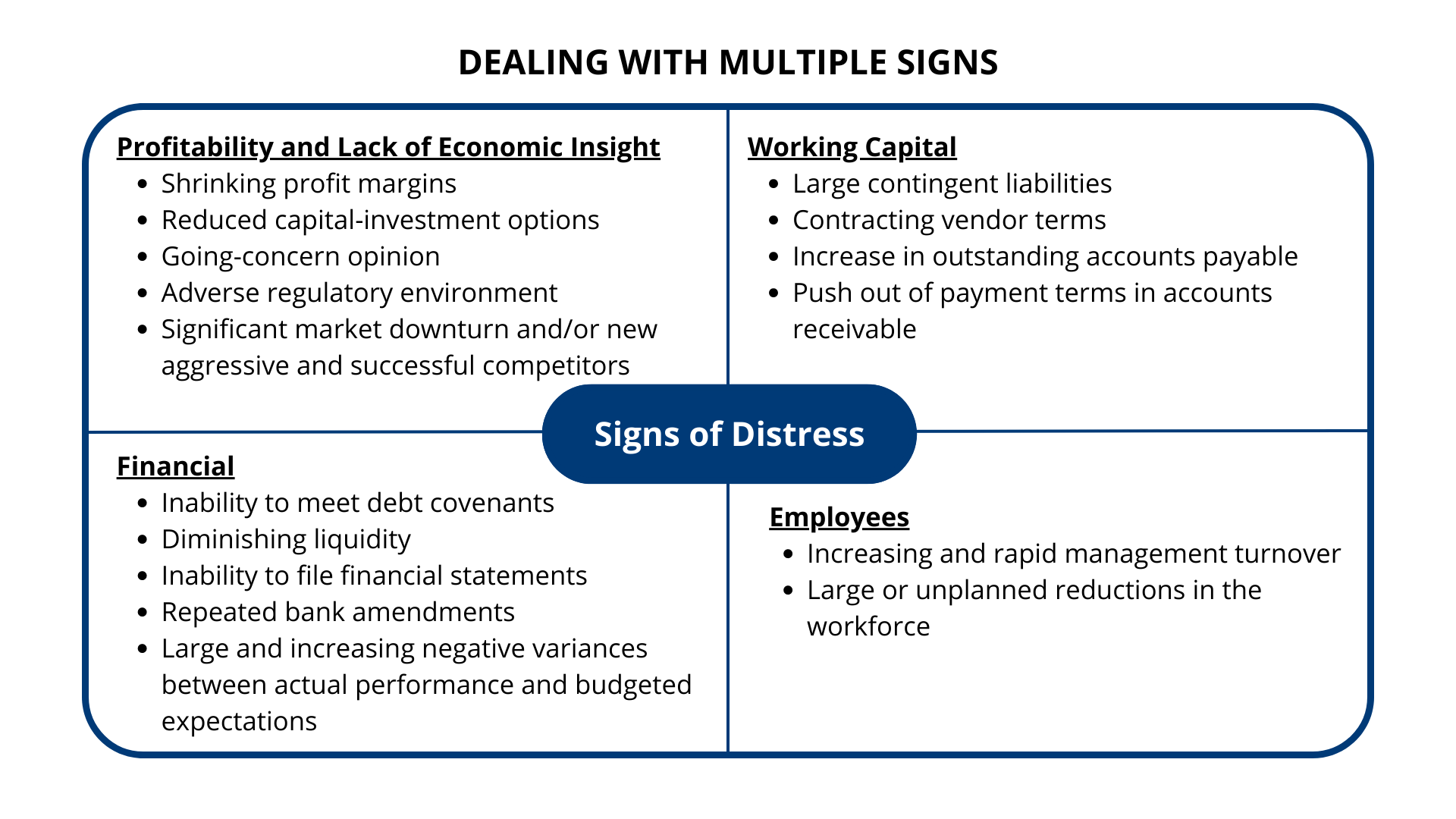
Managing an organization in crisis requires clear analysis, quick action, and a plan. Companies that have moved into a business crisis over a long period of time might fail to see that they are in distress. Like a frog placed in water which is slowly brought to a boil, it is difficult to see danger that is building up slowly. The faster you acknowledge that there is a problem, the more time you have to fix it before it gets worse. The more distressed the situation is, the less time there is to analyze. One of three critical requirements to succeed is diagnosing the current and future business situation, developing a structured performance management plan and implementation to ensure needed improvements.
“The process for turning around troubled companies is easy to understand and challenging to implement”
1. Analyze the business
The objective of the analysis stage is to determine the severity of the situation and whether it can be turned around. Questions you should ask include: Is the business viable? Can it survive? Are there sufficient resources to turnaround the organization?
Operational strategies to include are: increasing revenue, reducing costs, selling and redeploying assets, and establishing competitive repositioning. Strategic initiatives include adopting sound corporate and business crisis strategies and tactics and setting specific goals and objectives.
2. Stop the bleeding
At this stage, the objective is to gain control of the situation, particularly the cash, and establish breakeven. Centralize the cash management function to ensure control. If you stop the cash bleed, you enable the entity to survive. Time is your enemy. Protect asset value by demonstrating that the business is viable and in transition. You must raise cash immediately but be careful to not take on “bad” debt making it more difficult or expensive and puts the organization at great risk.
“Businesses fail because of mismanagement. Sometimes it is denial, sometimes negligence, but it always results in loss”
3. Develop a plan
As a leader, continuously monitor, adjust, and even reformulate your plan as new information emerges. Be ready and willing to pivot, and prepare for the inevitable “one step forward/two steps back” setbacks. Establish a communications routine and stick with it, even if there’s nothing to say other than “nothing new at the moment.” When progress has been made, even if it’s minor, be sure to share it so that people don’t despair. Communication should be two-way: listen to what your team is saying, and not saying. The information and insights they have may surprise you.
Turnaround or growth, it’s getting your people focused on the goal that is still the job of leadership.
4. Focus on cash
A successful turnaround really comes down to one thing, focusing on cash and cash returns. That means bringing a business back to its basic element of success. Is it generating cash or burning it? And, even more specifically, which investments in the business are generating or burning cash. A realistic forward-looking cash flow projection highlighting the main sources and drainage of cash and the time horizon available with realistic best, likely, and worst-case scenario options. The cash flow is the key tool to managing, targeting, planning, and controlling the implementation of the crisis plan.
5. Build traction
Build traction for change with quick wins. The tendency of most leaders is to put all of their focus and resources into three or four big bets to turn a company around. That can be a high-risk approach. Even if big bets are sometimes necessary, they take a lot of time and effort and they don’t always pay off. In addition to going after big bets, managers should focus on getting a series of quick wins to gain traction within the organization. Such quick wins can be cost-focused, cutting off demand for some external service they don’t need, or they could be policy focused, such as introducing a more stringent policy on travel and meal expenses. Not only do such moves improve the bottom line, but they also generate support among employees. You are likely to find that employees across the organization are supportive of change. They work hard if you give them a reason to stand up and be positive about the company. When you quickly take real action, and when those actions affect change, you send a powerful message.
6. Build your team
Find and retain talented people beyond the leadership team, there are two types of people.
Institutional knowledge
First are those that have institutional knowledge. They may not be your top performers, but they know all the ins and outs of the company—and are vital to understanding the impact of potential changes on the business. Many times they are the disgruntled ones, unhappy with the company’s performance.
Uncomfortable truth
Second, you need people who are willing to point out uncomfortable truths. A turnaround is also a real opportunity to find the next level of talent in an organization.
7. Track Progress
The final stage of business crisis management is putting all the work into action. With a clear vision, the right resources, and motivation, the execution becomes easier. But this stage is also extremely critical as leaders often have a lot of lessons to learn. Once the plan is put into action, leaders have to carefully track progress, learn from their mistakes and identify and build on their strengths.
8. Emerging
After a crisis has abated, you should expect new processes, strategies, and cultures to emerge. Adjusting both emotionally and cognitively may take a while. Once the most immediate and challenging aspects of a crisis are under control, think about the kinds of crises that your organization is likely to experience in the future.
Ampleo Can Help
If your or your client’s business is going through a financial crisis, contact Ampleo for business crisis management help. Our consultants are trained to analyze the situation, develop a plan of action, and execute quickly.

How to Manage & Improve Cash Flow for Small Business
Cash flow management is a vital component in maintaining a healthy company. Knowing how to manage cash flow for your small business can positively impact your ability to accurately and strategically plan for your company’s future.
The following will help you improve your cash flow management, arming you with the skills you need to make the best decisions for your company.
What Is Cash Flow?
Your company’s cash flow is the net value of the inflow and outflow of your company’s money. Measuring cash flow provides an accurate account of your change in balance sheet accounts.
3 Main Types of Cash Flow
There are three main categories of cash flow: operating, investing, and financing. Learning to track and separate your inflow and outflow for each is crucial for making informed decisions about your spending.
1. Operating Cash Flow
Operating Cash Flow (OCF) is the measure of your company’s inflow and outflow relating directly to your core day-to-day operations: for instance, your lease, electricity, and payroll. OCF is calculated using the following formula: Operating cash flows = net income + non-cash expenses (usually depreciation expenses) +/- changes in working capital
2. Investing Cash Flow
Your Investing Cash Flow deals with long-term assets, like buildings and properties you own. These are assets you intend to hold for an extended period.
3. Financing Cash Flow
The money you owe creditors is considered financing cash flow. Maintaining a healthy business means staying current on borrowed money.
What Is a Cash Flow Forecast?
A cash flow forecast uses your historical data to project a course for your future operations. Forecasting can help you decide whether to free up funds to expand your business or to prepare for a shortfall.
Positive and Negative Cash Flow
Positive cash flow means more money is coming into your business than outflow. A negative cash flow means the opposite: you’re spending more than what’s coming in.
You can repay debts or prepare for difficult financial times with a positive cash flow. A negative cash flow is a warning to make adjustments to prevent an extended shortfall.
What Is Cash Flow Management?
Cash flow management involves monitoring, analyzing, and adjusting your company’s spending and receiving to remain financially stable. Managing your cash flow allows you to recognize potential short-term problems or take advantage of strategic growth when you have enough liquidity.
How to Manage Cash Flow for Your Small Business
Cash flow management allows you to accurately plan and budget based on hard data. At Ampleo, we assist our clients in building out a 13-week cash flow forecast. This forecast helps them learn to track their spending and receiving in order to catch potential problems—before they become a problem.
For instance, if you have some customers that are slow to pay, this can lead to unexpected cash restraints. With the proper knowledge about your cash flow, you can avoid getting behind on your payments to your suppliers by borrowing from a line of credit, or postpone your growth strategy during lean months. Having this kind of foreknowledge helps you operate your business with certainty, making the best use of your resources and avoiding problems before they hinder your business.
Why Is It Important to Manage Your Cash Flow?
Managing your cash flow is essential for properly planning in the immediate and long term. It can help you prepare for a cash crunch by discovering potential problems early or signaling the strategic time to expand. Lenders often require a cash flow report to determine whether it’s safe for you to borrow from them.
Knowing your cash flow is particularly important when growing your small business. You must be cautious about every dollar you spend, especially when you have limited resources. Information is your best defense against uncertainty.
How to Improve Cash Flow Management: 5 Important Practices
Managing your cash flow means preparing for conditions before they have an unwanted impact on your business. The following elements of proper cash flow management will help you stay on top of your company’s spending.
1. Tracking Your Cash Flow
Managing your cash flow helps you hold to a budget. Proper management requires understanding where you’re spending and where your earnings are coming from.
2. Managing Your Accounts Receivable and Payable
Knowing your cash flow helps you detect past-due customers so you can send them a reminder. You may find you’re behind on paying a supplier, in which case you can arrange payments without a late fee.
3. Offering Incentives to Customers
To improve your cash flow, consider offering discounts to customers who pay their invoices early. You can also simplify the payment process by accepting credit cards, e-checks, or other digital forms of payment.
4. Using Cash Flow Forecasting to Your Advantage
You can make better-informed decisions about the future of your business when you have detailed information on the past. Use forecasting tools like software and a qualified financial consultant to plan accurately.
5. Maintaining Close Ties with Lenders
Companies—large or small—will go through times when cash flow is limited. Keep positive, open communication with your lenders in preparation for temporary shortfalls. It may take a short-term loan or a line of credit to survive a money crunch.
Ampleo Can Help You Stay On Top of Your Cash Flow
With Ampleo, you’ll learn to use data to your advantage with our 13-week cash flow forecast. Businesses make better decisions about spending, expanding, or planning for leaner times when they know exactly where they stand with their cash flow.
Get in touch to find out how we can help you manage cash flow in your business today.
You've Got the Vision.
We've Got the Fractional
Team to Build It.
A fractional CFO who knows your numbers. A fractional CMO driving your pipeline. An HR leader building your people systems. Sales tax specialists keeping you compliant. Valuation experts ready when you need them. All embedded. All executing. All backed by Ampleo Intelligence, our AI platform.

You've Got the Vision.
We've Got the Fractional
Team to Build It.
A fractional CFO who knows your numbers. A fractional CMO driving your pipeline. An HR leader building your people systems. Sales tax specialists keeping you compliant. Valuation experts ready when you need them. All embedded. All executing. All backed by Ampleo Intelligence, our AI platform.
You've Got the Vision.
We've Got the Fractional
Team to Build It.
A fractional CFO who knows your numbers. A fractional CMO driving your pipeline. An HR leader building your people systems. Sales tax specialists keeping you compliant. Valuation experts ready when you need them. All embedded. All executing. All backed by Ampleo Intelligence, our AI platform.
You've Got the Vision.
We've Got the Fractional
Team to Build It.
A fractional CFO who knows your numbers. A fractional CMO driving your pipeline. An HR leader building your people systems. Sales tax specialists keeping you compliant. Valuation experts ready when you need them. All embedded. All executing. All backed by Ampleo Intelligence, our AI platform.