



Real advice from people who've done the work.
Advice grounded in experience from the experts inside 13,000+ businesses.
Everything we publish comes from people who are actually doing this work. You won't find generic business advice here. You'll find specific, useful content from finance leaders, HR directors, marketing experts, and turnaround specialists who bring real experience to businesses like yours.




All Insights
Explore by Category

Ampleo Ranks No. 3989 on the 2023 Inc. 5000
With Three-Year Revenue Growth of 116% Percent, Ampleo Ranks No. 3989 Among America’s Fastest-Growing Private Companies
LEHI, UT, August 15, 2023 – Inc. revealed today that Ampleo ranks No. 3989 on the 2023 Inc. 5000, its annual list of the fastest-growing private companies in America. The prestigious ranking provides a data-driven look at the most successful companies within the economy’s most dynamic segment—its independent, entrepreneurial businesses. Facebook, Chobani, Under Armour, Microsoft, Patagonia, and many other household name brands gained their first national exposure as honorees on the Inc. 5000.
“We are thrilled to be included in the Inc 5000 class of 2023,” said Ampleo CEO Lincoln Howell. “With a focus on helping other companies grow through our fractional CFO, CMO and CHRO model, it has been a privilege to witness our own rapid growth as well.”
The Inc. 5000 class of 2023 represents companies that have driven rapid revenue growth while navigating inflationary pressure, the rising costs of capital, and seemingly intractable hiring challenges. Among this year’s top 500 companies, the average median three-year revenue growth rate ticked up to an astonishing 2,238 percent. In all, this year’s Inc. 5000 companies have added 1,187,266 jobs to the economy over the past three years.
For complete results of the Inc. 5000, including company profiles and an interactive database that can be sorted by industry, location, and other criteria, go to www.inc.com/inc5000. The top 500 companies are featured in the September issue of Inc. magazine, available on newsstands beginning Tuesday, August 23.
“Running a business has only gotten harder since the end of the pandemic,” says Inc. editor-in-chief Scott Omelianuk. “To make the Inc. 5000—with the fast growth that requires—is truly an accomplishment. Inc. is thrilled to honor the companies that are building our future.”
About Ampleo
Ampleo provides business professionals, such as CFOs, CMOs, and CHROs, to companies on a fractional basis in order to help them achieve their full potential. The Ampleo model allows companies the freedom and flexibility to add highly experienced, strategic talent as they need it, without having to commit to full-time employment. It also offers talented business professionals the chance to do their best work for a range of enterprises while enjoying greater variety, flexibility, and work-life balance. Thousands of companies rely on Ampleo professionals to deliver sage direction and expert counsel at all levels of their organization. Visit ampleo.com today.
CONTACT:
Haley Stepan 801-590-7791 hstepan@ampleo.com
More about Inc. and the Inc. 5000
Methodology
Companies on the 2023 Inc. 5000 are ranked according to percentage revenue growth from 2019 to 2022. To qualify, companies must have been founded and generating revenue by March 31, 2019. They must be U.S.-based, privately held, for-profit, and independent—not subsidiaries or divisions of other companies—as of December 31, 2022. (Since then, some on the list may have gone public or been acquired.) The minimum revenue required for 2019 is $100,000; the minimum for 2022 is $2 million. As always, Inc. reserves the right to decline applicants for subjective reasons. Growth rates used to determine company rankings were calculated to four decimal places.
About Inc.
Inc. Business Media is the leading multimedia brand for entrepreneurs. Through its journalism, Inc. aims to inform, educate, and elevate the profile of our community: the risk-takers, the innovators, and the ultra-driven go-getters who are creating our future. Inc.’s award-winning work reaches more than 50 million people across a variety of channels, including events, print, digital, video, podcasts, newsletters, and social media. Its proprietary Inc. 5000 list, produced every year since 1982, analyzes company data to rank the fastest-growing privately held businesses in the United States. The recognition that comes with inclusion on this and other prestigious Inc. lists, such as Female Founders and Power Partners, gives the founders of top businesses the opportunity to engage with an exclusive community of their peers, and credibility that helps them drive sales and recruit talent. For more information, visit www.inc.com.
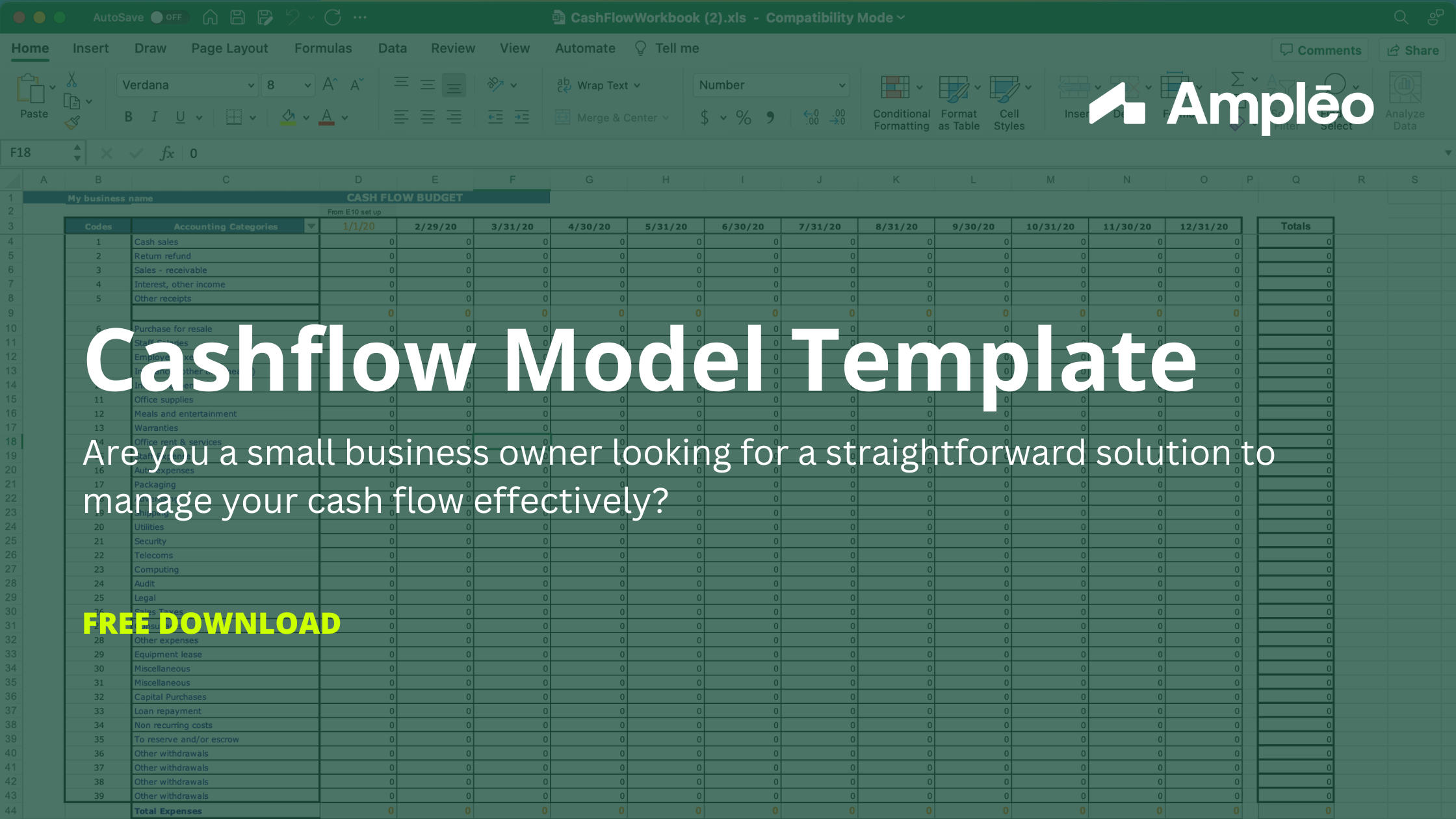
Cashflow Model Template: Simplify Your Financial Projections!
Are you a small business owner looking for a straightforward solution to manage your cash flow effectively?
A cash flow model is a crucial financial tool used by businesses to track the movement of cash in and out of their operations. It provides insights into a company’s liquidity and solvency, helping decision-makers assess the firm’s ability to meet short-term obligations and plan for future investments or expansions.
Our Cashflow Model Template is designed just for you. With minimal effort and time, you can gain valuable insights into your business’s financial health and plan for the future with confidence.
The cash flow model is typically divided into three main sections: operating activities, investing activities, and financing activities.
- Operating activities reflect the cash generated from the company’s core business operations like sales revenue, payments to suppliers, salaries, taxes, and other day-to-day expenses.
- Investing activities include cash flows from the purchase and sale of long-term assets such as property, plant, equipment, and investments in other companies.
- Financing activities encompass cash flows related to borrowing, issuing or buying back shares, and paying dividends
How to Use the Cashflow Model Template:
The template comes preformatted with easy-to-understand categories such as sales, expenses, inventory, and receivables.
Step 1: Input Your Data
Collect the necessary data. This includes the recent income statement, balance sheet, and any additional information on investment or financing activities. Simply input your relevant financial data into the designated fields.
Step 2: Calculations
Calculate the total net cash flow (operating + investing + financing) and compare it to the previous period’s balance. This gives you the closing cash balance for the current period. The template will automatically perform all the necessary calculations, giving you an accurate overview of your cash flow situation.
Step 3: Visualize Your Cash Flow
Review and analyze the updated model. Look for trends, potential issues, and opportunities. The template generates clear and concise charts and graphs, allowing you to visualize your cash flow patterns and identify potential areas for improvement.
Step 4: Make Informed Decisions
Armed with the insights from the cash flow model, you can make informed decisions to optimize your finances, manage cash reserves, and plan for any future challenges or opportunities.
Need More Complex Solutions or Expert Guidance?
While our Cashflow Model Template provides a convenient starting point, we understand that some businesses may require more comprehensive financial planning. If you need help developing a more complex cash flow model or require expert analysis of your results, contact our team at Ampleo.
Our Fractional CFO services provide you with access to experienced financial experts without the burden of hiring a full-time CFO. Our skilled professionals will work closely with you to analyze your cash flow model, interpret the data, and offer valuable recommendations for achieving your financial goals.
![Who Needs A Fractional CMO? [7 Signs that You Need One]](https://cdn.prod.website-files.com/6a6ca9c4de3fbc1c80b5f90d/6ab3f69f04658c62abf76dfc_Aug1-_-Photo-1-1536x576.jpeg)
2 Effective Media Buying Tips [What You Need To Know]
Are you looking for ways to connect with your audience? Media buying is an effective way to grow your business by placing ads in front of interested viewers. Whether it’s through TV commercials, radio spots, newspaper ads or online platforms, media buying provides endless possibilities to reach customers.
So, let’s dive into some essential tips for media buying, how to make the most of media buying campaigns, and how to effectively connect with your target audience!
Spend Strategically
In today’s fast-paced business environment, developing a strategic approach to media buying is crucial to achieve desired marketing outcomes while balancing the cost-effectiveness of campaigns. While it may be tempting to cut back on spending, doing so could lead to ineffective campaigns that do little to benefit your business.
As such, it’s vital to ensure that your budget provides enough impressions to create a memorable impact, particularly when building brand awareness or promoting a product.
Diversifying your advertising media and layering them over time is one effective strategy for enhancing customer engagement. Combining multiple types of advertising can help reach your audience through various channels and at different times, repeatedly over time and ensure that each vehicle is working. This approach not only minimizes the risk of relying too heavily on any one channel but also allows businesses to tap into different target audiences across different modes of communication.
Investing in diversified media advertising can lead to stronger brand recognition, customer loyalty, and ultimately better business outcomes. A strategic approach to media buying that balances cost-effectiveness with desired marketing outcomes can help businesses develop effective campaigns that consistently reach their audience over time, leading to better overall results.
Get Expert Guidance
Media buying has become increasingly complex, requiring specialized expertise to deliver the best results. Partnering with an agency or experienced consultant can help businesses navigate the complexities of media buying, ensuring they invest in the right channels and creative approaches to maximize their marketing efforts.
These professionals have a wealth of experience, knowledge, and industry insights that can help businesses make informed decisions about their media buying strategy.
An experienced media expert can provide valuable insights into the latest trends, audience behavior, and advertising formats that resonate with your target audience. They can also help identify budgetary constraints and opportunities, enabling businesses to optimize their media budgets for maximum impact. By partnering with an agency or consultant, businesses can save time and money by avoiding inefficient spending on ineffective campaigns.
Ultimately, working with a media expert can help businesses achieve their desired marketing outcomes while minimizing risk, making smarter investments, and boosting their brand profile across various channels.
With the right spend and diversification, your campaigns can drive awareness that delivers real results. Look no further and contact our team at Ampleo to connect you with a fractional CMO that can help you handle your campaigns and help make a powerful impact on your target audience today!

4 Benefits of Fractional HR Services
As businesses grow, managing human resources can become a daunting task. Hiring, payroll, benefits management, and compliance are all complex and time-consuming tasks that can take away from a business owner’s focus on other areas. This can be especially challenging for small businesses, as they may not have the resources or expertise to manage HR operations in-house. Fractional HR services offer a solution to this problem. Fractional HR providers offer businesses access to a team of experts who can manage their people operations on a part-time or project basis. This can save businesses time and money, and it can also give them access to expertise that they would not otherwise have.
In this blog post, we will explore the top benefits of using fractional HR services for your business. These benefits include:
#1 – Cost savings
Outsourcing HR tasks to fractional HR providers can save businesses a ton of money, especially those with limited resources. Hiring a full-time HR staff can be expensive, with the salaries, benefits, and overhead costs associated with it. With fractional HR services, businesses only pay for their specific needs without worrying about long-term commitments. This ultimately allows businesses to save money, reduce costs, and still access the expertise necessary to ensure compliance and effective HR management. You can get access to an entire team of experts to perform HR services at a cost per year that is less than hiring one HR professional.
#2 – Expertise
Fractional HR providers are experts in people operations, with years of experience in keeping up with the latest trends and best practices. They offer a range of services, including running a compliant business, attracting top talent, and retaining talent.
Fractional providers can deliver businesses valuable insights into optimizing processes and ensuring compliance with legal regulations. They also help businesses identify and fill gaps in the effectiveness of their workforce.
#3 – Objectivity
Fractional providers do not have the same personal and professional stakes in the company’s success as full-time employees. This allows them to be more objective in their assessments and recommendations. They can help you identify blind spots or areas where your team may need additional support. This can help you make more informed decisions and avoid potential pitfalls.
#4 – Value of time
Ultimately, outsourcing HR tasks to fractional HR services allow businesses to focus on what they do best — growing their business — while leaving HR tasks in the hands of experienced professionals. This frees up your time so you can focus on other areas of your business that need your attention.
If you are a business owner struggling to manage your HR operations, fractional HR services may be a good option for you. By working with a fractional HR provider, you can save time and money and get access to the expertise you need to grow your business.
Contact us today to learn how a fractional HR expert from Ampleo can help you!

What Is a Cash Crunch: What Happens When Money Is Tight
As a turnaround professional, I help companies that have fallen behind in their financial obligations to creditors, employees, and other stakeholders. The cash problems a company experiences usually start small but can grow over time to become almost unmanageable. Many of these problems can be avoided with more effective cash management discipline. Learn what a cash crunch is and the five steps business owners should use to survive.
The earlier a company can adopt these, the better its chance of successfully weathering the storm. In other words, these steps help ensure a cash crunch does not become a cash crisis.
What Is a Cash Crunch?
A cash crunch means a business doesn’t have enough money to keep up with operations and needs to change its non-liquid assets into cash. This can mean a lack of funds to buy materials or pay staff and suppliers.
Dealing with a cash flow crunch isn’t necessarily bad; it impacts your business, but it can happen for positive reasons, such as an increase in customers.
It’s crucial to understand a cash crunch does not equate to bankruptcy.
What Causes a Cash Crunch?
A cash crunch can happen for a variety of reasons, both positive and negative. Some are due to poor planning, and some are due to unexpected circumstances. A cash crunch can occur due to:
- A sudden need for increased materials
- Accidents or injuries on the job
- Employees not being productive
- Fluctuations in the market/season
- Low gross margins
- Long legal processes
- Low sales
- Insufficient employees to keep up with demand
- Unmet equipment needs
- Low net margins
- Lack of a working capital line of credit
- No emergency fund
- An excessive gap between material requisition and the finished product
- Too many past-due accounts
- Too many big customers paying late
- Too much focus on short-term debt solutions
- Too much unnecessary inventory
- Unexpected global events
- Unexpected high sales
- Wasted resources
5 Ways to Avoid Cash Crunch
Concerned about running into a cash flow crunch? Here are five ways to avoid this difficult situation.
1. Control and Manage Cash
Managing cash can mean a lot of things, but the following three elements are key:
First, ensure there is discipline around the number and types of ways cash can be spent by the business. Company leaders should limit the number of signatories on their accounts, reduce the number of employees with company credit cards, and be sure oversight exists for processing trade payables. In theory, they should channel all the company’s spending to a few trusted individuals. Nothing should go out the door that the CEO or CFO is unaware of.
Second, it’s essential a company forecast its cash position weekly, including cash receipts and disbursements. All too often, a prospective client in a cash crisis explains that the sudden crunch was unexpected. A cash crisis is always unexpected when the company does not forecast cash! If the company had forecasted cash, it would have had weeks to prepare and mitigate the crisis.
Last, find hidden sources of cash. These might be stale legal retainers that have never been refunded, dormant cash accounts, unclaimed property, collection of tax credits, and so forth. Every business has hidden cash in some form, and it’s usually large enough to fund an entire payroll or two.
2. Find Expense Savings
Companies usually have no problem ramping up cost structures during good times, but squeezing costs out of the business during bad times is rarely as easy. Most businesses in a state of decline assume a slump in sales is temporary and that it just needs to weather the storm. While this can be true in some cases, it’s important to recognize when cost cuts are necessary and how to effectively make them.
Business owners must be quick to respond when expense cuts are necessary. Any delay in making expense cuts will cause a cash crunch. When expense savings include downsizing staff, it’s important the company seeks qualified help to comply with local and federal employment laws.
3. Collect from Customers
Cash is king during a cash crisis. Business leaders should accelerate efforts to collect cash, invoice customers as quickly as possible, offer more generous discounts for timely payments, shorten payment terms, and aggressively collect from past-due customers. Management should hire legal help to protect security interests and/or file bond claims.
For businesses with long standing customer relationships, owners or other leaders with strong connections should get involved with collection activities.
4. Negotiate with Trade Creditors
Keeping communication channels open with vendors is critical. Start early to let vendors know you will pay them later than usual. It is critical to keep their trust so valuable products and services continue. When things get tight, negotiating with them will be easier if you have communicated along the way.
Negotiating with creditors can be a delicate effort, and companies should retain qualified legal counsel to help. With the right help, companies can usually find significant short-term cash savings by restructuring trade payables, lengthening payment terms, receiving debt forgiveness, and/or trading debt for equity.
5. Sell Non-Performing Assets
Just like households, companies accumulate a tremendous amount of stuff over their lifecycles. It’s important for company leaders to take action with slow-moving inventory, non-productive capital assets, and dormant real estate. Companies should also evaluate non-performing divisions, locations, and product lines. The sale of non-performing assets can be a significant source of capital.
Cash is the lifeblood of any business.
How to Avoid a Cash Flow Crunch as a Startup
Are you a startup business owner concerned about a cash crunch as you expand your business? The key to avoiding it is to meticulously plan so you have control over as many variables as possible. Additionally, this method allows you to weather the unexpected easier.
Create and Follow an Accounts Receivable and Payable Calendar
Compile all debts you have, both one-time and monthly debts, and when you have to pay them. It’s important to keep track of when you’re supposed to be paid; that way, you know when to follow up with the other party.
You can’t pay off your debt if you don’t get paid.
Try to Predict the Future
Create a cash flow forecast where you estimate how your cash will come in and out of your business. It won’t be perfect, but it can give an idea of the health of your finances. It’s best to start with weekly or monthly forecasts.
Maintain an Emergency Fund
Before disaster strikes, put money aside for the unexpected. The fund may not be able to circumvent all issues, but it will soften the blow.
Know Your Limits
It’s easy for startups to think and go big, but that leads to periods of cash crunch. Right from the start, know what your limits are and follow them. Only expand when you have the space and money to do so.
Have a Backup Source of Funding
Let’s say you’re experiencing a cash crunch and have run out of money from your emergency fund. The longer you’re without money, the more your business will suffer. This is why you need a backup source such as a loan or a business credit card.
Ampleo Can Help You Avoid Cash Crunches
All the steps above are proven tools successful companies use to manage, preserve, and collect cash. It’s never too late to implement the steps, and the earlier a company can adopt these practices, the more likely it is to survive a cash crunch.
If you aren’t confident in your financial skills or just aren’t sure where to start, Ampleo can help. We have CFOs on hand ready to help you and answer any questions you may have about the financing process.
Contact us to amplify your business’s opportunities today!

Financial Modeling Mistakes to Avoid
What Is Financial Modeling? How to Build Financial Models & Avoid Common Pitfalls
Financial modeling is an integral part of any business’ forward-looking financial planning. Contrary to popular opinion, increasing revenue and returns are not as simple as “turning on the faucet . ”
In order for revenue and returns to follow growth, you’ll need to model exactly HOW you’ll get there, which is where financial modeling comes in. What is financial modeling? How does it keep your business organized? Keep reading to find out.
What Are Financial Models?
Financial modeling is a financial analysis skill that uses accounting, business metrics, and finance to represent the business at a future date. It is also a tool used in forecasting that relies on key assumptions to perform calculations and make recommendations based on that information.
Good models are built out using varying assumptions because of the somewhat unpredictable nature of forecasting.
By modeling the results of a range of values for each assumption, you can see if your business is on track to meet your goals or if you’re headed for trouble. Models inform financial planning, helping you set and reach better goals over time.
How to Use a Financial Model
With proper use, financial models can help leadership teams make strategic decisions, predict financial outcomes, and test different business scenarios based on informed data.
It’s important to note that there are many different types of financial models , each of which serves a specific purpose. If you’re unsure what type of financial model would suit your needs, look over these 10 types of financial models. It’s not remotely exhaustive, but it offers a solid foundation.
Depending on how you structure them, financial models can be extremely helpful in making informed business decisions like:
- Allocating capital to specific projects or keeping it
- Choosing to go public or not
- Expanding the business organically or staying the same
- Keeping or selling business assets
- Needing to raise capital or not
- Opening or postponing a new product line
- Passing on or making acquisitions/mergers
- Raising or shrinking the quarterly budget for the entire sale year
Additionally, providing potential or current investors with financial models will inspire confidence in your company’s strategic direction and make deals easier to achieve.
How to Build Financial Models
Each financial model requires different steps unique to its approach. However, most models follow the same basic outline.
1. Look at and Add the Historical Results
When creating a financial model, it’s always good to look at the past to build a foundation to work from. Around three years’ worth of financial statements, investment choices, and other financial data makes a good baseline to work with.
This data displays different trends that occurred and how they were handled, giving you the context necessary to navigate similar trends in the future. This historical data will greatly influence your forecasts, so ensure that all the data is accurate.
2. Generate the Income Statement
An income statement shows company profits and expenses. It’s split into operating and non-operating capital.
It’s a crucial part of financial modeling because every company and investor needs to know how the business performed in a single fiscal year. An income statement highlights changes in areas like gross profits, direct costs, and different aspects of capital that can change every fiscal quarter.
3. Fill Out the Balance Sheet
A balance sheet shows a company’s financial health by listing equity, assets, and liabilities. Sometimes balance sheets and income statements are mistaken for the same thing, but they are different. An income statement shows a business’s performance for a specific period, and a balance sheet shows what a company owns and owes.
Write the Property, Plant, and Equipment Schedule
Part of filling out the balance sheet is writing the property, plant, and equipment (PP&E) schedule. Also known as fixed assets, PP&E fall under the noncurrent asset category—which means they have value for years but it depreciates over time. Noncurrent assets include:
- Bonds
- Copyrights
- Equipment
- Furniture
- Patents
- Property
- Vehicles
Because these assets don’t change dramatically like more volatile assets, it’s important to keep track of their depreciation schedule.
4. Create the Cash Flow Statement
A cash flow statement shows how much cash a business makes and how that cash has been used during the fiscal quarter or year. This portion of the financial model includes actions like investing or paying debt.
5. Forecasting
Now that you have all the foundational information in your financial model, you can create forecasts for your business. This data feeds various models that show potential versions of the future depending on different changeable factors.
Most forecasting models are for three to five years in the future.
If you choose to, you can focus on specific items like revenue margins, changes in market trends, or growth opportunities/risks.
Avoiding the Pitfalls of Modeling
While financial models can be very useful in forecasting and planning, the model is only as good as the one building it and the assumptions feeding into it. When building a model, be sure to avoid these common mistakes .
Pulling from Incorrect Financials
Because many models pull from financial statements, if your statements are a mess, it’s probably safe to say that your model will be too. Be sure your financials are accurate and up-to-date before building a model that relies on them.
In most businesses, this requires having appropriate controls and processes in place so that the model is correct going forward. Not sure where to start? Here’s an article on when to hire a CFO that may help.
Building a Concrete Model
As with most planning and forecasting, it’s nearly impossible to get every aspect of a model 100% correct. That’s why it’s so important that models are living, breathing documents. As time goes on, assumptions change, and your business progresses, you can use your model as a template, adjusting the levers and assumptions as needed.
Don’t make it too difficult to alter your assumptions ; you’ll save yourself a ton of time by not building additional models when an update gets the job done .
Trying to Nail Down One Assumption
Assumptions are the core of a model. Yet, while incorrect assumptions lead to incorrect recommendations, making accurate assumptions is genuinely tough— especially as you model out further in the future.
Instead of trying to nail down an estimate, aim for a range of values for that particular assumption. Then, use the model to calculate the different outcomes for a few different values in the range. Modeling this way also gives you a set of expectations should things go awry. Now that you’ve got a few different outcomes to work with, you can plan for the best and the worst.
Using Too Many Assumptions
The more informed your model is, the more information it can give you about your business. However, there is a point where using more assumptions doesn’t provide additional benefit.
Particularly in startups, it’s difficult to assume anything very far into the future, let alone make accurate assumptions for 20 different factors. Though spending hours planning and calculating every assumption may seem beneficial , Dave Chase , CFO and director at Ampleo, suggests focusing on 5 – 15 assumptions that you can really hone in on. You’ll save time and get a more accurate model in the process.
How Ampleo Can Help
Financial models can be effective tools for planning and forecasting. By modeling out revenue, businesses can more readily “turn on the faucet” and begin reaping the rewards.
If building out financial models seems like too time-consuming a task, partner with Ampleo. Our consultants are experts in modeling and forecasting. We offer the full suite of financial services, from CFOs to controllers and accountants.
Contact Ampleo today to learn how our financial model experts can help you. You can trust that your business is in the hands of seasoned veterans, ready to take your business to the next level.
Additional Resources When Building Financial Models
If you’re looking for more resources to improve your financial model-building skills, make sure to review:
![3 Advantages of Digital Marketing For Business [& Why You Want to Incorporate it into Your Strategy Business]](https://cdn.prod.website-files.com/6a6ca9c4de3fbc1c80b5f90d/6ab3f6f52fc996f41d4f06f1_July2-Photo-e1688156363523.png)
7 Traits to Look for When You Hire a Fractional CMO
Hiring a fractional Chief Marketing Officer (CMO) can be a smart move for any business that needs expert marketing guidance but might not have the resources to hire a full-time executive. However, not all fractional CMOs are created equal. To ensure that you find the right fit for your business, here are some of the things to look for when you hire a fractional CMO:
- Experience: Look for a fractional CMO who has experience working with businesses like yours. Ideally, they should have experience in your industry or a related industry and be able to provide case studies or references from past clients.
- Strategic thinking: A good fractional CMO should be able to think strategically about your business and develop a marketing plan that aligns with your overall business goals. They should be able to identify areas of opportunity and develop a plan to capitalize on them.
- Strong communication skills: Communication is key when working with a fractional CMO. Look for someone who is a good listener and communicator, and who can clearly articulate their ideas and strategies to you and your team.
- Execution: A fractional CMO should be able to not only develop a marketing strategy but also execute it. Look for someone who has experience managing an agency or teams of marketing specialists, executing marketing campaigns, and can demonstrate a track record of success.
- Flexibility: A fractional CMO should be able to work within your budget and be flexible in terms of the scope and duration of their engagement. They should be willing to adapt their approach based on your business needs and feedback.
- Ability to work remotely: Fractional CMOs typically work remotely, so it’s important to find someone who is comfortable working in a virtual environment. Look for someone who has experience working remotely and who has the tools and technology to collaborate effectively with your team.
- Cultural fit: Finally, it’s important to hire a fractional CMO who is a cultural fit with your business. Look for someone who shares your values and vision, and who will be able to work effectively with your team.
At the end of the day, you need someone knowledgeable, reliable, and trustworthy to take over your marketing needs. Entrepreneurs are far too busy to handle this on their own. After all, time is money.
Instead, hire a fractional CMO from Ampleo! By doing so, you’ll be working with someone who’s independent and headstrong just like you. You’ll have access to all the talent of a full-time CMO at a much higher value.
When searching for a fractional CMO, it’s crucial to evaluate their experience, strategic thinking capabilities, communication skills, execution track record, flexibility, remote work proficiency and fit within the company culture. Choosing the right fractional CMO for your business can lead to improved marketing outcomes, growth, and cost-effectiveness.
So, don’t wait any longer – contact Ampleo today and we’ll help take your business to new heights!
![3 Advantages of Digital Marketing For Business [& Why You Want to Incorporate it into Your Strategy Business]](https://cdn.prod.website-files.com/6a6ca9c4de3fbc1c80b5f90d/6ab3f6f62fc996f41d4f070e_July1-_-Photo.png)
3 Advantages of Digital Marketing For Business [& Why You Want to Incorporate it into Your Strategy Business]
If you’re looking for an effective way to reach your target market, digital marketing just might be the solution you’ve been seeking. Digital marketing is a pervasive term that encompasses all types of advertising and engagement strategies that use digital channels such as email, social media, search engines, and web platforms to promote a brand, product, or service.
1. Increased Reach
Digital marketing offers several advantages that make it an attractive option for businesses looking to expand their reach. One of the primary benefits of digital marketing is its ability to connect businesses with customers anywhere in the world, instantly.
With online platforms and social media, businesses can now easily connect with potential customers that would have otherwise been out of reach. This allows businesses to expand their customer base and increase brand awareness on a global scale.
Social media is an excellent example of how digital marketing can be used to expand business reach. Over the last two decades, social media platforms provide businesses with a low-cost, targeted advertising option that can be customized to suit any industry or niche. Social media advertising allows businesses the ability to target specific demographics based on their location, interests, and buying behavior.
This means that businesses can reach potential customers with relevant and personalized advertisements, increasing the likelihood of driving conversions. Additionally, social media provides businesses with the added benefit of being able to engage with customers in real time, building trust and credibility through direct communication.
2. Adaptability
Adaptability is another significant advantage of digital marketing for businesses. Unlike traditional marketing, digital marketing is much more flexible and can be easily adapted to fit changing trends and customer behavior. This makes digital marketing a perfect solution for businesses with smaller budgets to spend on advertising.
Digital marketing enables companies to experiment with different strategies and messaging to see what resonates most with their target audience. It provides an opportunity for businesses to test their campaigns and make necessary changes in real-time, without causing significant financial loss. With digital campaigns, businesses can start small and increase their budgets once they know what is actually working.
Digital marketing is all about collecting data and analyzing it to improve performance. Digital marketing platforms offer a variety of tools and analytics that allow businesses to measure the effectiveness of their campaigns. These insights provide valuable information about customer behavior, helping businesses to refine their marketing strategies further. This ability to collect valuable insights empowers teams to make strategic changes as necessary without causing long-term damage or significant waste.
3. Measurable ROI
Last, but certainly not least, another advantage of digital marketing is that it has the ability to gain insights into consumer behavior in near real time. With modern analytics tools, businesses can analyze customer engagement with a particular brand, product, or service, providing valuable insights into their preferences and needs.
This data is vital for companies to develop and refine their marketing strategies and to create targeted messaging that resonates with their audience. Ultimately, this allows businesses to build meaningful relationships with customers and create a personalized experience that generates conversions in a cost-effective manner.
Digital marketing is an unbeatable tool for businesses in almost every industry. Its adaptability, reach, and measurable ROI make it one of the most effective channels contemporary businesses can leverage for augmenting their brand awareness and driving sales.
Ampleo fractional CMOs specializes in growing brands by deploying targeted strategies that reach your customers in the most personalized way possible.
Contact us for a free consultation to learn more about leveraging the advantages of digital marketing to grow your business!

What Is FP&A: Your Comprehensive Guide To Grow Your Business
Scaling a business can be challenging. Many find themselves unable to interpret performance metrics or know how to use that data to grow their business.
The following comprehensive guide will help businesses understand what FP&A is and how it is a vital ingredient to help them reach their long-term goals.
What Is FP&A in Finance?
Financial planning and analysis (FP&A) is what companies need to forecast, budget, and analyze their financial data. It is both a process and an important job role. One can think of FP&A as the corporate equivalent of a personal investment advisor.
In this case, FP&A will look at a company’s books, consider its goals, and formulate a plan to help it reach those goals. But what is financial planning and analysis, and how can businesses of any size take advantage of it?
What Does an FP&A Do?
FP&A is used for three important purposes.
1. To Develop a Financial Strategy
FP&A is used to analyze a company’s expenses, profits, and specific financial metrics to help devise a plan for the company to reach its future goals.
2. To Advise on Financial Planning
FP&A is used to make recommendations to upper management and executives on changes that could benefit the company.
3. To Report on a Company’s Financial State
An FP&A professional can compare monthly accounting data to annual goals and offer ways to adjust budgets and decisions that help align actuals to company goals.
Why Is Financial Planning and Analysis Important?
When it comes to growing a business, ignorance is not bliss. Companies that remain aware of their financial data have a much better chance of survival. Even when management is diligent about knowing their numbers, FP&A brings insights into the implications of how a company is tracking toward a targeted goal.
Understanding your company’s performance can help you recognize potential obstacles that are otherwise easy to overlook and make it simpler to understand the impact of different decisions.
What Is the Difference Between FP&A and Accounting?
Some companies wonder why they need FP&A when they already have an accountant to keep watch over their numbers. The main difference between accounting and FP&A is this: The accountant looks to the past—FP&A looks to the future.
An accountant studies the historical record to make sure financial statements are accurate. FP&A looks at the same data to advise on decisions that will shape the future.
Who Is Typically Given the Responsibility of FP&A?
An individual who fills the financial planning and analysis role may have many different job titles and related responsibilities. It depends largely on a company’s size, budget, and complexity.
For a large corporation, FP&A may be the responsibility of a CFO or an individual solely focused on FP&A. In a startup, the accountant could be tasked with the most fundamental FP&A role.
Some FP&A job titles include:
- FP&A controller
- Director of FP&A
- VP of FP&A
- Financial planning manager
- Manager of corporate finance
- Senior financial analyst
For companies that have matured to the point of needing FP&A support but cannot afford to hire a professional full-time, Ampleo can provide fractional CFO services, so companies can gather and interpret valuable data at an affordable price.
How Can an FP&A Impact a Small Company or Startup?
When a company is new, it exists in a world of unknowns, often matched with high ambitions. Over time, young companies need to gain a mature, data-backed perspective on how close they are to accomplishing their goals, along with recommendations on what needs to change to get there.
Often, startups pitch their vision to multiple investors. Everything may be a projection without solid data to back up the company vision. FP&A can help these startups provide tangible reasons for a company trajectory and display how an investment will be used to reach profit goals.
When Do You Need FP&A?
FP&A should be part of every company’s operations, but every business has different needs. A small company just starting out likely doesn’t need to hire an independent analyst to pour over the details of its operations.
However, as a company generates a history of transactions, profits, and hiring decisions over time, FP&A will play a more prominent role.
Larger corporations and SMBs that have operated for years should institute a consistent monthly, quarterly, and annual FP&A process as a regular part of operations.
What Are the Four Main Aspects of FP&A?
Financial planning and analysis involve numerous functions, but there are four primary ways FP&A is used to help businesses.
1. Planning and Budgeting
An FP&A professional will analyze a company’s annual budget and develop a financial strategy designed to meet goals outlined by the company’s executives or founders.
In addition, they will look at the company’s actuals to update their forecast and help fine-tune budgeting. Instead of waiting until the year’s end in hopes of hitting an exact target, an FP&A can look at the company’s ongoing financial performance and make adjustments periodically to close the gap between its projections and actual performance.
2. Integrated Financial Planning
Businesses work within the confines of an operating budget. Managing day-to-day costs is necessary, but projections and strategic planning are equally important to help a company scale into its future vision.
Integrated financial planning (IFP), also called continuous financial planning, is a unified approach to working with financial data so FP&A projections and strategies can be aligned with a company’s ongoing operational expenses.
3. Management and Performance Reporting
Because a company’s FP&A expert develops and oversees a strategy for accomplishing annual and long-term financial goals, that same individual provides valuable reporting updates to upper management, along with investor relations, when applicable.
FP&A analyzes historical data that assists management in making more accurate decisions based on facts. FP&A assists management by:
- Conducting scenario analysis
- Presenting the potential impact of different strategy outcomes
- Monitoring and reporting on performance compared to projections
- Advising on the best strategy forward
- Offering detailed insights on specific positions and departments
FP&A can provide specific data about monthly variance against a company’s actuals and quarterly board deck presentations, along with more extensive yearly reports.
4. Forecasting and Modeling
Just as an accountant makes calculations based on a company’s past profits and expenses, an FP&A professional studies data to guide a company’s plans for the future.
FP&A aims to help executives make deterministic company-wide decisions to meet short-term and long-term goals. Forecasting is predictive, and usually consists of using actual historical data to predict the future.
With modeling, FP&A professionals use analysis to project potential future scenarios that help guide executive decision-making. For instance, FP&A may be able to use company data and financial trends to determine methods of expanding, building a factory, and hiring key positions. Modeling can display how personnel changes, budgeting, and other factors might lead to various outcomes, helping executives choose the best course of action.
What Does the Future Look Like for FP&A?
Every industry is experiencing a technological revolution to one degree or another, and FP&A is no different. Specifically, technologies that allow challenging tasks to be automated or simplified are helping FP&A professionals uncover even more meaningful, granular data than was possible before.
Artificial intelligence (AI) allows FP&As to obtain data faster than ever before, empowering experts to share analysis and reports more often, which in turn helps companies make corrections to operations quickly and efficiently.
The trend of FP&As having better tools for diagnostics will only continue, meaning small businesses may see even better growth opportunities than were possible in the past. This is especially true for rapidly growing industries like software as a service (SaaS) and eCommerce.
Machine learning (ML) is a unique aspect of AI that allows software systems to train on specific company data to make better use of it over time. While ML isn’t an immediate benefit to companies too new to offer large datasets for interpretation, medium to large-scale companies will see new advantages from ML.
Grow Your Business with Insights from Ampleo
Ampleo provides fractional CFO, CMO, and CHRO solutions to help you mitigate risks while using actionable strategies that can grow your business. Subscribe to our newsletter to receive updates and insights about how Ampleo is shaping industries with tailored services to suit your needs. Take a look at our case studies to learn how we’ve helped companies attain their goals.
Do you want to learn more about how FP&A can help your company? Get in touch with us today.

3 Tips for How to Communicate With Your Target Audience Effectively
The companies that achieve long term success have figured out how to connect with their audience and communicate with them effectively over time. Whether using memorable imagery or carefully crafted copy, the best marketers know how to create content that is honest, adds value to their audience, and is compelling enough to command their attention among a deluge of competing voices.
1. Get To Know Your Audience
The most important step in knowing how to communicate with your target audience effectively is to get to know them. This means coming to an understanding that not every person is your audience and requires a deep dive into their demographics, psychographics, and pain points through qualitative research. Sit down with your audience and ask them open-ended questions that encourage them to share the good and the bad. You’ll glean insights that you wouldn’t be able to in any other way.
Identify the pain that your target audience is experiencing and how your product or service can provide a real solution to it. Choose a voice that connects with your audience and craft a message that connects the problem they are facing with your solution and leads them to act.
In addition to their pain, get to know your audience’s goals, beliefs, and interests. When you can show them that you understand them, they will trust your brand and want to connect with you. Tailored messaging that shows a real understanding of your audience can make all the difference in effectively marketing your product.
2. Go Where They Go
Once you’ve perfected your messaging in a way that resonates with your target audience, the next step is to go where they go so you can communicate your message to them. This involves figuring out where your consumers are located, both physically and virtually.
You might attend tradeshows, join relevant online communities, advertise across digital and traditional platforms and/or engage with them via social media. Going where they are is important in ensuring that the right people are getting your message.
One of the best ways to discover where to find your audience is by building an infrastructure map of your industry. Research opinion leaders and influencers, events, communication vehicles, forums, associations, and other avenues that can serve as a targeted megaphone to reach your audience.
3. Test, Test, and Test Your Message Again
Test your message internally and with your audience to see what works and what doesn’t. Often something makes perfect sense to us if we are heavily involved, but a fresh set of eyes is the best way to check for understanding and resonance. You will most likely go through several rounds of messaging and testing before you arrive at something that achieves the desired result.
One of the benefits of digital marketing is that you can run seamless A/B testing, which allows you to serve up different messages to different segments of your audience and see empirically, which messages are driving conversions and leads. This can be applied to images as well to ensure that you are communicating in the very best way both visually and with the written word.
Understanding how to communicate with target audiences can be a laborious process but it’s always worth it to make the extra effort to understand them and learn how to connect with them.
Work with a fractional CMO from Ampleo and get the help you need to begin understanding how to communicate with your target audience and ease their pain points. A fractional CMO can help you think strategically, conduct market research, understand your audience’s needs and interests, and craft a compelling message that resonates with them.
![How to Create A Sense of Belonging In The Workplace [& The Power It Can Have]](https://cdn.prod.website-files.com/6a6ca9c4de3fbc1c80b5f90d/6ab3f7477e2a5888aff64c2f_AdobeStock_117750988-scaled-e1686866044509.jpeg)
How to Create A Sense of Belonging In The Workplace [& The Power It Can Have]
Imagine the power of a team and a world where everyone feels like they truly belong – a world where diversity is celebrated, inclusivity is cherished, and acceptance is the norm. In such a place, the concept of belonging takes center stage, bringing about remarkable transformations.
Several years ago while volunteering at a company booth at a local Pride celebration, a team member dropped by and expressed her surprise that the company was participating at a Pride event. When questioned why, she explained how she kept a store-bought photo of a man on her desk that she told everyone was her husband. She further went on to say that she felt the people she worked with would isolate her if they found out she was married to a woman. Imagine how much mental energy this woman had to expend every day on hiding her true self – energy that she could have devoted to her work and the outcomes of the team. Why is belonging important in the workplace? Belonging is an essential piece of a truly inclusive culture. When people feel seen and heard for who they truly are, they are more likely to engage fully, bringing their authentic selves and contributing to the collective growth and success of the team.
Why Is Belonging Important In The Workplace?
Belonging is closely intertwined with mental health and well-being.
When individuals feel a genuine sense of belonging, they experience greater psychological safety, self-esteem, and overall life satisfaction. In a truly accepting culture, where everyone feels valued and accepted, people are less likely to experience isolation, discrimination, or exclusion. This sense of belonging contributes to reduced stress, improved mental health, and an increased ability to navigate challenges. It lays the foundation for individuals to thrive and reach their full potential.
Belonging ignites innovation and creativity.
When diverse perspectives are embraced and individuals feel like they belong, it creates an environment where collaboration and the exchange of ideas flourish. By bringing together people from different backgrounds, experiences, and expertise, we generate a tapestry of insights and possibilities. This diversity of thought leads to breakthroughs, unconventional solutions, and fresh approaches that push the boundaries of innovation.
Belonging is the glue that holds communities together.
It is a place where everyone feels they belong, and the workplace and communities become stronger, more cohesive, and more resilient. When people feel a deep connection and sense of ownership, they are more likely to actively participate, contribute, and invest in the well-being of their teams and communities. This engagement fosters social cohesion, reduces divisions, and promotes collective action, ultimately creating a more inclusive and harmonious society.
7 Steps to Build a Diversity, Equity, Inclusion, and Accessibility (DEIA) Culture
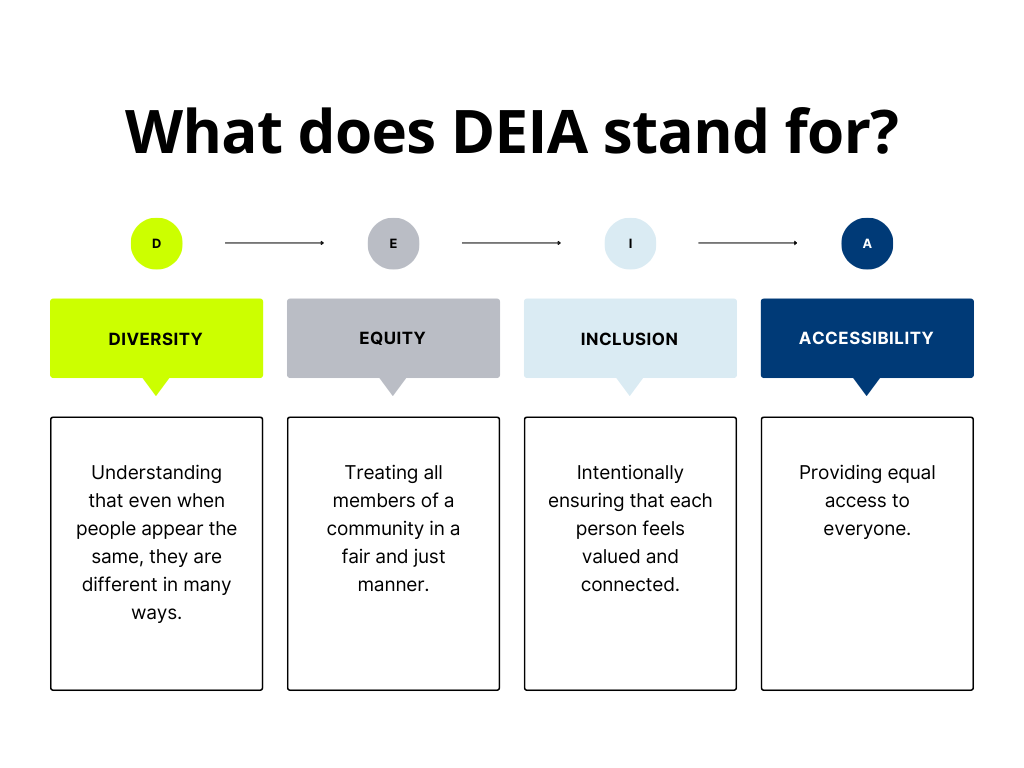
Building a strong diversity, equity, inclusion, and accessibility (DEIA) culture requires a comprehensive and ongoing commitment. Here are some key steps that companies can take to build a strong DEIA culture.
- Establish goals and values that emphasize the importance of DEIA.
- Leadership commitment is essential. Executives and leaders must actively champion efforts and lead by example. Leaders should also be accountable for the progress and outcomes of DEIA initiatives.
- Diverse and Inclusive Hiring Practices: Implement practices to ensure a diverse candidate pool, utilizing diverse social channels and implementing blind resume screening, and providing unconscious bias training for all recruiting and hiring managers.
- Education: Offer DEIA training and educational programs for team members at all levels to create awareness, foster understanding, and build inclusive behaviors. Training can cover topics such as unconscious bias, cultural competency, inclusive communication, and allyship, creating a shared understanding of DEIA principles throughout the organization.
- Diverse Representation and Employee Resource Groups: Actively work towards diverse representation at all levels of the organization. Employee Resource Groups (ERGs) can be established to provide support, networking opportunities, and advocacy for underrepresented groups.
- Inclusive Policies and Practices: Review and revise policies and practices to ensure they are inclusive and equitable. This includes evaluating compensation and benefit structures, promoting work-life balance, and implementing flexible work arrangements that accommodate diverse needs.
- Metrics: Conduct assessments of DEIA efforts and track relevant metrics to measure progress and identify areas for improvement. Data such as diversity representation, parity pay audits, retention rates, employee satisfaction, and advancement opportunities should be collected to inform decision-making and accountability.
Belonging enriches the lives of individuals and creates transformative change. By celebrating uniqueness, fostering empathy, nurturing well-being, driving innovation, and strengthening communities, we can create spaces where everyone feels valued, respected, and empowered. As we strive for a more equitable and inclusive future, let’s embrace the power of belonging and work together to build a society that embraces and celebrates the diversity of all its members.
Ampleo Can Help
Not all companies have the tools, resources, or talent to devote to building a strong base to ensure successful DEIA efforts. This is where fractional executive talent can be a powerful resource to know how to create a sense of belonging in the workplace and help companies build strong DEIA programs. Ampleo fractional CHROs are ready to partner with you to provide the executive talent you need to build a workforce that will out-perform, out-innovate and out-produce all others.

Preparing for an Exit
Are you considering selling your business or navigating through an exit strategy? We understand that this can be a complex and crucial process, which is why we have created a downloadable guide that covers every step of the way.
Our guide is divided into four essential phases to help you successfully prepare for an exit:
- Planning for an Exit: When considering an exit, it is important to assemble a team of experts to assist in the process.
- The Sale Process: Executing a well-run sales process can help improve outcomes and increase the likelihood of finding the right buyer.
- Post Letter of Intent: Once a buyer is under a letter of intent (LOI), it is crucial to negotiate the critical points and successfully close the deal.
- Post Close: After the deal has been closed, there is still work to be done to effectively integrate the business with the new buyer.
Prepare yourself for a seamless and successful exit by downloading our comprehensive guide today.
You've Got the Vision.
We've Got the Fractional
Team to Build It.
A fractional CFO who knows your numbers. A fractional CMO driving your pipeline. An HR leader building your people systems. Sales tax specialists keeping you compliant. Valuation experts ready when you need them. All embedded. All executing. All backed by Ampleo Intelligence, our AI platform.

You've Got the Vision.
We've Got the Fractional
Team to Build It.
A fractional CFO who knows your numbers. A fractional CMO driving your pipeline. An HR leader building your people systems. Sales tax specialists keeping you compliant. Valuation experts ready when you need them. All embedded. All executing. All backed by Ampleo Intelligence, our AI platform.
You've Got the Vision.
We've Got the Fractional
Team to Build It.
A fractional CFO who knows your numbers. A fractional CMO driving your pipeline. An HR leader building your people systems. Sales tax specialists keeping you compliant. Valuation experts ready when you need them. All embedded. All executing. All backed by Ampleo Intelligence, our AI platform.
You've Got the Vision.
We've Got the Fractional
Team to Build It.
A fractional CFO who knows your numbers. A fractional CMO driving your pipeline. An HR leader building your people systems. Sales tax specialists keeping you compliant. Valuation experts ready when you need them. All embedded. All executing. All backed by Ampleo Intelligence, our AI platform.