



Real advice from people who've done the work.
Advice grounded in experience from the experts inside 13,000+ businesses.
Everything we publish comes from people who are actually doing this work. You won't find generic business advice here. You'll find specific, useful content from finance leaders, HR directors, marketing experts, and turnaround specialists who bring real experience to businesses like yours.




All Insights
Explore by Category

Be a Better Leader and Be Present
Awakening
I’ve had a significant personal awakening in the past 18 months. Whereas I once genuinely felt I was a good listener and empathizer before, I experienced a pretty stark realization mid-last year: I began learning from and observing a couple of individuals who helped me see that I wasn’t really connecting with others as well as opportunities allowed. If I were to summarize briefly the interpersonal skill I was missing, it was true empathy. I’ve recently been impressed by the CEO of Microsoft Satya Nadella’s musings on empathetic leadership. In today’s world of increasing distraction supported by the always connectedness of our devices and the change that has brought to an ever-connected workplace, as a leader, being there in the moment when you’re talking with people is becoming increasingly rare. I don’t think many would dispute this.
Not-So-Present Leadership
Perhaps the greatest embodiment of being a distractible leader was found when I was a young CFO during my interactions with a consultant who was brought in during a difficult period. This consultant was distracted by his devices more than anyone else I’ve worked with. He almost never looked at you in meetings. Rather, he was head down with his phone or computer. It was so bad it was “almost” funny. In our frustrations, many of us would just stop talking to see how long it would take before he even noticed.
The “funny” thing is, nearly all of us have the same problem to one degree or another. However, we are either unaware of it or we think we’re sly enough to not get caught by the distractions of our devices or just internal chatter in our own minds. Either of these behaviors takes us out of the moment and limits our ability to truly connect with one another.
Leadership from Alongside
When I read Rasmus Hougaard and Jacqueline Carter’s HBR article on being present as a leader, I was further inspired and validated by my own awakening. While our traditional understanding of leadership is one who is out front and literally leading or pulling along an organization, perhaps true leadership is done alongside the people. It is being with them in the struggle, listening carefully, and seeking real understanding without being distracted. And let’s be honest… it is so easy to be distracted today.
Being Present
Hougaard and Carter offer us four points to keep in mind as we seek to be powerful leaders who deeply understand the individual and the challenge at hand. This level of understanding only comes by being present. If you aspire to be a great leader, you must be present. Here are some of their suggestions as found in their HBR article:
- Be Here Now: Stay on task, listen carefully and put away distractions.
- Plan for Presence: Plan moments into your day to connect with people in genuine, heartfelt ways.
- Do Less, Be More: Said another way, listening is often the greater solution than making recommendations. A comical but poignant example is the clip “It’s Not About the Nail.” Funny, sad, and true at work just as much as it is at home.
- Embodied Presence: Be self-aware. Know when you have internal distractions, and then know how to solve them or place them aside momentarily so that you can be present with people around you.
As you are increasingly present with people, you’ll find that they’re more able to share with you. Those opportunities are gifts to connect in deeper ways. They are opportunities to validate their experience to let them know you understand. That understanding is where the real opportunity to “lead” begins.
Save Save

Great Leaders Disagree & Commit
When I made a move from the East Coast to the Intermountain West, I found myself in what some might call a radically different work environment. Some fans of a more direct approach might call it “honesty vs. dishonesty.” The same principle but viewed from the more “compassionate” side might call it “heartlessness vs. empathy.” But inside of the change in styles, I was witnessing a real cultural challenge around the vulnerability and honesty to share what you feel as a leader rather than shy away from your own thoughts; sharing your instincts and feelings instead of hiding them for fear of offending.
Now I, for one, believe you can be honest about others’ performances or behaviors, your feelings on a matter that a colleague may feel differently on, or any other concept with which an organization is struggling without offending others. You can be direct, honest, and empathetic all at once… and for most of us, with practice, we can do it and have others feel our vulnerability and genuine concern.
Tomasz Tunguz, a venture capitalist at Redpoint, recently wrote about this topic. He skews toward the direct approach clearly but has elements of empathy in his writing as well. It’s worth reading his thoughts. One statement he makes is a quote from a well-known supporter of direct feedback, Jeff Bezos of Amazon:
Have Backbone; Disagree and Commit. “Leaders are obligated to respectfully challenge decisions when they disagree, even when doing so is uncomfortable or exhausting. Leaders have conviction and are tenacious. They do not compromise for the sake of social cohesion. Once a decision is determined, they commit wholly.”
Yes, it does require backbone to be direct. However, it also requires empathy to maximize leadership impact. Directness without empathy relies upon a leadership based on fear. But directness paired with empathy is true leadership.

Empathy and Leadership – The Power Duo
As I sat in a packed room a week ago listening to an almost mythical figure, the CEO of Microsoft Satya Nadella, I found myself fully drawn in. Here was a longtime employee of a company long viewed as dominant but perhaps also corporate, bureaucratic, and stiff. Yet here was the CEO of that company, emanating warmth and vulnerability. He felt genuinely concerned and empathetic. I was further surprised then when he began speaking about leadership in terms not so much of vision and strategy, but empathy and sincerity. Little wonder, then, that the company has shifted.
Satya began a book tour after his recent publication of “Hit Refresh,” and made a stop in my town to address a packed room that was celebrating tech leadership. Days later this article appeared, and I was impressed that he remained on point on his tour. Here is one great line from a nice summary article:
Yet, Nadella admits that showing empathy doesn’t always come easily. It must be consciously cultivated and put into practice “Now, the challenge, though, is you can’t just say—I’ll go to work and turn on my empathy…,” he said. “I’m not even claiming that empathy is innate, it is something that needs to be developed…”
In the past year of my life, I’ve also been on a journey of enlightenment around empathy in leadership. It was truly refreshing to hear another espousing some of the feelings on the subject I’ve felt lately.

We’re Here to Guide You Through the Storm
The stormy, cloudy skies of finances are always daunting at first. They block your view of what lies ahead on the horizon and offer an unpredictability that can be unsettling – especially when the result could be solid ground with new growth ahead or a sinking ship with all your endeavors and efforts.
As the Captain of Excursions and Opportunities (CEO), it is your duty to your mates to forge the journey ahead, leading you and your voyager to unprecedented success and unimaginable fortunes. But what good is a chest of gold at the end of the journey if your ship lies at the bottom of the ocean with it?
The aggressive current of cash flow can quickly sweep you and your crew into uncharted territory, as dollars and cents are thoughtlessly thrown against debts and finances like waves crashing against an impenetrable cliff. And when the fog sets in, your financial mission can take on new turns, twisting you in all sorts of directions and misleading you away from your destination. It’s during these clouded moments that judgments can steer you to shore or straight into shallow, rocky territory.
But lo and behold, light pierces through this dark and confusing time, guiding you through the mysterious territory and unclear landscape. It’s this light that can steer your business barge to safety so that it may stay afloat another day. So long as you follow the navigation of the lighthouse, you’ll surely find solid ground again.
Let Ampleo be the lighthouse to your weathered journey of success. With our years of combined experience, there is no storm that Ampleo hasn’t seen. We understand that while the passage may be unknown to novice businesses, a safe arrival is always the harbor one aims for. Our beacon of knowledge sheds light on the unknown territory ahead of your journey and can guide your crew to the trove of success.

Make or Break: Lessons From the Dot-Com Bubble
We all remember the dot-com bubble. A new century and endless possibilities promised a new and exciting market with tremendous economic growth, only to burst at the seams as several companies collapsed and the Federal Reserve increased rates. But from the ashes, sound examples of what not to do in business planning emerged.
Inspired by CNN’s article “10 Big Dot.Com Flops ,” we picked our favorite three bust examples with lessons that transcend time and the business market.
Kozmo.com
The snack Uber of its time, Kozmo.com allowed customers to order a range of small purchases that were guaranteed to be delivered within the hour. Founded in 1998, Kozmo was available in nine cities and was once thought to eventually be a direct competitor to UPS and FedEx. But the lack of minimum charge coupled with free delivery was the Achilles heel of this promising plan, and Kozmo.com closed shop in April of 2001.
Lesson learned: Don’t sell yourself short! You have something that people want, so don’t be afraid to ask for fair compensation in return.
Webvan.com
Remember Webvan? Yeah, neither do we. This grocery delivery service website was undoubtedly the largest of dot.com’s busts, a victim of growing too fast and too quick. At the peak of its success, Webvan.com expanded to eight cities in under 18 months and was valued at $1.2 billion in November of 1999. But the steep downfall put them out of business by July 2001. The culprit? Investors quickly discovered that the customer base and margins were not large enough to sustain projected growth.
The lesson? Only grow as large as your base allows. Make projections optimistic but real or the surprise could kill you.
Flooz.com
Before bitcoin and PayPal was Flooz.com, a site that strictly sold online currency for customers to use instead of credit cards. While the concept may have been questionable, to begin with, large investors like Cisco and Delta Air Lines still contributed $35 million. The website spent a pretty penny with its cushioned pockets ($8 million to be exact) with an ad campaign that featured Whoopi Goldberg. But in under two years, the company went bankrupt. Surprised? We weren’t.
The lesson here: While good marketing is definitely worth the investment, no amount of razzle-dazzle can make up for a poor business model.

How Prepared Is Your Business for Growth?
When it comes to growing your business, knowing where to even start can sometimes be the hardest step. One easily identifiable step is having a plan. So on a scale of one to ten, how does your business rank for growth preparedness?
- Executive decisions are made by the hour. It’s hard to know what will pop up by the end of the day.
- There are a couple of goals for each day, but a lot still comes up unplanned.
- Most of the day is scheduled with the rest open to changes.
- Daily targets are met with time left to prepare for the following day’s objectives.
- Weekly tasks are outlined in successive order. Only a handful of occurrences are unaccounted for.
- Monthly missions are met with random tasks only occurring on a small daily scale.
- Quarterly objectives are planned months in advance with the flexibility to account for unexpected snags.
- Yearly objectives are planned months in advance, with regular checks to ensure targets are on track.
- Yearly action plans are made months in advance with variables identified and backup plans created.
- Ten-year goals are made with little or no unintentional occurrences.
Clearly, you’re not at 10 – and if you think you are, then you might want to take a closer look at your assessment. No matter how strategic your planning may be, there will always be variables. To successfully scale your business, you need a certain level of flexibility to take the necessary steps and get back on track when things go awry.
Holding on to a plan while the course completely changes is like holding on to a cinder block while on a sinking ship. On the other hand, changing course to ride out every single wave and losing focus of your destination is like sailing without a compass or even identifying which is the North Star (hint: it’s that big bright one ahead).
No matter where you’re at in your planning stage, be sure to keep your long-term plans, with regular re-assessments and a healthy attitude toward change so you can survive the daily challenges of growing your company.

3 Tips to Grow (and Keep Growing) Your Business
While the goal of every business is to grow, it’s nearly impossible to know how fast it’ll come or how extensive. Unless your hidden talent is seeing the future, a good amount of decision-making will be based on calculated guesses. Your choices should not only be based only on what you need now but also on what you might potentially need down the road – without overshooting your target and spending too much.
There are so many factors to consider when developing your business, from everyday decisions to long-term goals. But there are at least three long-term decisions that can help you advance throughout the years.
1. Opt for expansive software and streamlined processes.
Finding a quick solution may solve an immediate technical problem, but can sometimes cause severe issues later on. While you won’t always know what the tech world will put out in even a year, try picking a platform and/or suite with more than what you need at the moment so that it can keep up with future growth. The consequence of not always looking ahead is that your entire business could build up too high on an unstable foundation, causing crashes, mishaps, and unmanageable technical problems that affect your entire day-to-day work.
2. Invest in acquiring good employees – and retaining them.
As you grow your business, it’s essential to have a team that can support the expansion. When you pursue candidates, take a close look at not just their experience and knowledge, but also how well they fit with the business culture. Otherwise, they may disengage and look for a better fit somewhere else. Once you’ve attained your dream team, take the extra steps to ensure your investment in time and training is not wasted by fostering a supportive environment. High turnover rates can cost you more in the long run, and the tribal knowledge and hands-on experience those employees take with them can never be bought back.
3. Be objective in your leadership and decision-making.
Trusting your gut is an essential skill to master when developing your business, but don’t mistake pride for intuition. Before making a big decision, listen to your middle management and their thoughts on how a change will affect their teams’ responsibilities. If you’ve hired someone for their knowledge in a specific field, then it’s in your best interest to trust their recommendations. Otherwise, what good is it to bring them in if you won’t listen to their advice? Change and the unknown can make anyone uncomfortable, so do exercise your instinct with confidence – but also look at your hunch from an outside perspective. Is it the right move, or simply the one you feel like making without any data support?
Of course, there are many other ways to prepare your business for growth. Remembering that growth is certain, regardless of size or speed, can help keep perspective on long-term goals.

4 Balancing Acts That Can Help You Be a Better Leader
Being a great leader is much easier said than done. What qualities one person or team admires in a manager, another detests. Behaviors that seem great in theory often crash and burn in practice. Striking that perfect balance is a delicate process that takes lots – and lots – of practice.
Along with the fundamentals like delegation and accountability, there are a vast amount of leadership skills that can make a big impact. We’ve recognized four balanced behaviors that go just beyond the basics:
1. Don’t use negative language; stay positive.
While you should be genuine with your team, never talk negatively about a person, team, or project, as this type of behavior can create a distrusting environment.
This use of language doesn’t do much to assure your team that you see yourself as a team player. And as an example and insight to the company, your negative attitude (even if just for a day) can shape their perception of a project, department, or company member for the entirety of their career with your organization.
2. Understand the difficulties your team faces.
Just like learning how to be an effective leader is easier said than done, so are the duties of your team members.
If you’re fortunate enough to be promoted from within the same team you’re now leading, then you have an in-depth understanding of how high-level decisions can affect the day-to-day responsibilities of your team. If you’re an external hire, then really try to comprehend the challenges your team faces. Even the simplest of tasks can have their challenges with redundancy or frustration.
Having this insight not only gives you a better idea of needed solutions, but your team will also trust that your decisions are made with their well-being in mind.
3. Be honest about challenges.
While you may not be able to discuss every detail with your team, being honest and forthcoming about what to expect helps them feel as though they are part of the solution – because after all, they are. Feeling a sense of ownership of a process that will lead to positive outcomes is an inspiring motivation to work as a team.
4. Practice team-building exercises – but not too many.
Depending on the nature of the job, it can be easy for each individual to stay in their own comfort bubble. But while the work at hand is still a top priority, designating time to help your team get to know you and each other is a huge, underrated tactic that can really pay off in the end.
Schedule a lunch hour, plan a few games on a Friday afternoon, or suggest going out after work. When your team is more comfortable talking to one another as well as you, then communication (and empathy) bolsters. Just don’t abuse this tactic as a way to avoid your own duties – no one wants to work with their own version of The Office’s Michael Scott.

Bill Belichick on Leadership
On occasion, we are blessed by witnessing truly amazing and rare leadership. That happened to me this past week when I stumbled upon an interview on CNBC with Bill Belichick, who is an unapologetic leader and, despite his gruff appearance, is empathetic, thoughtful, and decisive. During the course of the two-hour interview (which is consolidated into 15 glorious minutes ) Bill, in his direct and non-flowery way, hits upon the issues of leadership crisply and clearly, and distills them into five basic principles of leadership.
1. Building a team that’s exhaustively prepared but able to adjust in an instant.
In Bill’s view, this means that he regularly engages his team in true team-building exercises. Not all organizations can have their teams train with Navy Seals as a team-building event, but we can creatively access the same principles of camaraderie that band your team together in times of trial or challenge.
2. Having the discipline to deploy your “dependables.”
What many people enjoy about the New England Patriots is the same thing they enjoy with the San Antonio Spurs — a team that is focused on execution and not flash. That doesn’t mean we shouldn’t employ a team of superstars, rather than solid and consistent performance always includes a team filled with dependables who we can truly count on at all times.
3. Being the boss.
Leadership is lonely and tough. Far too many leaders try to be everyone’s friend and fail because they try to please everyone. Leadership is about sensing and articulating vision and direction despite how you feel others might view you. Sometimes, it requires that we stand alone.
4. Caring about everything going on in the lives of your people.
Empathy, or an understanding of another person, draws people closer and builds connections and relationships. We have all experienced being around people that make us feel like we’re the only ones in the room at that moment. Typically that’s because the other person is clearly focused on us and our experience with work as well as what’s happening outside of work. They’re completely with us in the moment. That is really caring and real leadership.
5. Never rest on your laurels.
‘Leaders’ who lead for the status or power that comes from leadership don’t really feel like real leaders, do they? We sense and feel false leadership. Sometimes this can be described as positional leadership instead of natural leadership — people who are considered leaders because of their title rather than their leadership qualities. These types of leaders frequently talk about their achievements and see that as qualifications for leadership. Natural leaders don’t seek out praise, it just follows them.

Painting with Numbers – Data Visualization
You’ve undoubtedly heard the saying, “a picture is worth a thousand words.” Well, that’s what data visualization is for your business. It takes the vast ocean of raw numbers regarding your company’s performance, pulls them out of those confusing spreadsheets that are impossible to interpret, and translates them into easy-to-read, visually digestible charts and graphs. It makes tracking the productivity, efficiency, and effectiveness of your business infinitely less complicated and when done right can give you powerful insights for improving everything you do.
Now, that’s great and all, but what executive has the time and resources to commit to it? What we’re talking about isn’t something you can do in-between meetings or on your lunch break (if you even get one of those). It’s the culmination of a near unhealthy amount of hours spent obsessively digging through data, analyzing it, organizing it, and figuring out how to present it in an appealing way — not exactly conducive to your attempts at work-life balance.
The good news is: you don’t actually have to do any of it yourself these days. Because thanks to the ever-advancing digital world we live in, there’s this thing called an Executive Dashboard that will do all the legwork for you and spit out some amazing data visualization and performance insights with just the push of a button. Phew, problem solved, right?
Not quite. There’s still a critical piece of the data visualization puzzle that needs to be solved. What kind of data should you be seeing? What are the most important metrics to manage and track? What are the things that will make or break your company’s success? These are what are called Key Performance Indicators (KPIs). They’re unique to your business and signal how well you’re doing, or not doing, in important areas.
There are hundreds of KPIs that businesses can use to measure themselves, including:
- Revenue and sales
- New customers
- Billings v. bookings
- Received leads
- Site traffic
- Click-thru and conversion rates
… and a whole lot more.
When it comes to identifying the right KPIs for your business, having the help of a financial expert comes in handy. They’ll work with you to figure out what KPIs will have the biggest impact on your business, set target ranges for success in each, and then create strategies that will enable you to hit them. Having that combination of technology that can break down and simplify your data for you, plus humans who can help you actually do something about it is a must — and it’s what makes data visualization work.
At the end of the day, it all comes down to this: What you can’t see can and will hurt your business. Executive dashboards and data visualization make sure you see the right data at the right time in the right format — so you can make smarter, quicker decisions with it.
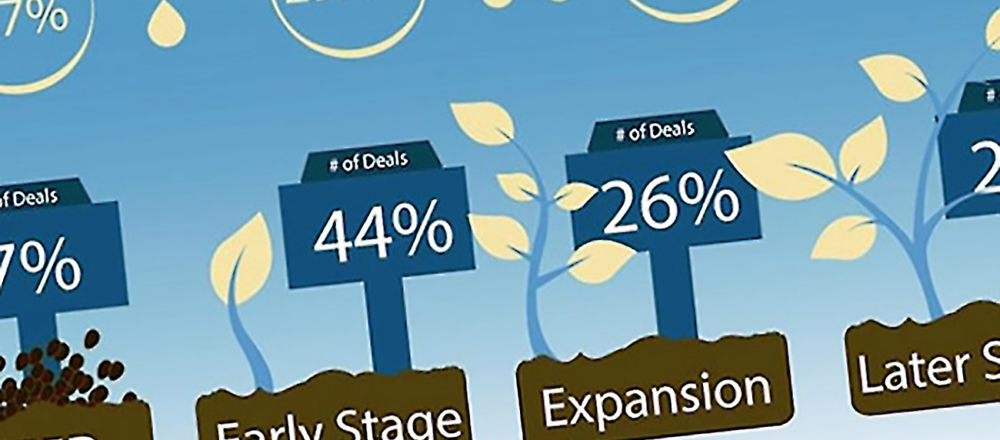
Explanation of Key Terms in Venture Financing
Sellers of businesses are starry-eyed about valuation. They often focus on it and neglect to consider other key terms. So much so that they overlook key provisions or terms that can have a meaningful impact on the amount of cash received when they sell. Below are some of the most common terms that every entrepreneur who plans to take equity investment should understand. Those interested in more detail should also read the new third edition of Venture Deals by Brad Feld. Each term is also linked to an external source for further clarity.
Common Stock
Common stock is the basic equity interest in a company. It is typically the type of stock held by founders and employees.
Preferred Stock
Preferred stock has various “preferences” over common stock. These preferences can include liquidation preferences, dividend rights, redemption rights, conversion rights, and voting rights, as described in more detail below. Venture capitalists in private companies typically receive preferred stock for their investment.
“Series” of Preferred Stock
When a company raises venture capital in preferred stock financing, it typically designates the shares of preferred stock sold in that financing with a letter. The shares sold in the first financing are usually designated “Series A”, the second “Series B”, the third “Series C” and so forth. Shares of the same series all have the same rights, but shares of different series can have very different rights.
Liquidation Preference
Liquidation preference refers to the dollar amount that a holder of a series of preferred stocks will receive prior to holders of common stock in the event that the company is sold. It is usually expressed as a multiple of the amount invested. (E.g. 1x or 2x).
Senior Liquidation Preference
A series of preferred stocks have a “senior” liquidation preference when it is entitled to receive its liquidation preference before another series of preferred stocks. (All series of preferred stock will, of course, be “senior” to the common stock simply by virtue of having a liquidation preference.)
Participation
Preferred stock is said to have “participation” rights when, after the holders of preferred stock receive their full liquidation preference amount, they are then entitled to share with the holders of common stock in the remaining amount being paid for the company. For example, if the company is sold for $200 million, the preferred stock has a liquidation preference of $30 million and the preferred stock represents 40% of the total number of outstanding shares of the company, then the $200 million would be distributed among stockholders as follows:
(1) – First $30 Million – Paid to holders of preferred stock per their liquidation preference.
(2) – Remaining $170 million:
Preferred stockholders receive their 40% pro rata share ($68 million) per their participation rights. Common stockholders receive the remaining 60% ($102 million). Totals: Preferred stockholders – $98 million
Common stockholders – $102 million
Capped Participation
Participation rights are described as “capped” when the participation rights of the preferred stock are limited so that the preferred stock stops participating in the proceeds of a sale (or other distribution) after it has received back a pre-determined dollar amount (caps typically range from three to five times the original amount invested).
Building on the previous example, if the participation rights of the preferred stock were capped at a 3x multiple of their liquidation preference amount (which 3x includes the amount of liquidation preference), then the result would be that the preferred stock would receive only an additional $60 million in participation in step (2) above. Thus, the total amount received by the holders of preferred stock would be $90 million (down from $98 million without a cap) and the amount received by the holders of common stock would increase to $110 million (up from $102 million).
Preferred Stock Conversion
The rights of preferred stock will allow the holder to analyze whether it makes more sense to receive distributions according to the preferred terms, or, if the economics make more sense, to forgo all preferred rights and convert to common – typically at a 1 to 1 ratio. Note: If the price paid for the company in this example were substantially higher (e.g., $275 million) then the holders of preferred stock would convert to common stock (thereby giving up their liquidation preference) in order to eliminate the 3x cap, because 40% of $275 million equals $110 million, which is $12 million more than the preferred would receive if they did not convert and were subject to the 3x cap.
Anti-dilution Provisions
Anti-dilution provisions retroactively reduce the per-share purchase price of preferred stock if the company sells stock in the future at a lower price. This is affected by increasing the conversion rate of the preferred (move from 1 to 1 to something more favorable) and accordingly increasing the number of shares of common stock into which a share of preferred stock converts. There are two main types of anti-dilution protection: weighted average anti-dilution protection and ratchet anti-dilution protection. The weighted average is more common recently and is less punitive. The fundamental difference is as follows: ratchet anti-dilution will fully adjust the preferred conversion rate to the new price regardless of how few shares are sold at the new price, whereas the weighted average will adjust toward the new price, but if very few new shares are sold, the impact will be lessened.

5 Things to Prepare Your Company For Growth
Growth doesn’t happen by accident. It takes strategic planning and focused execution to make it a reality. Learn the basics on how to prepare your company for growth. Ideal for CEO’s, CFO’s, VP’s of Marketing. VP’s of Sales, and VP’s of Customer Experience.
You've Got the Vision.
We've Got the Fractional
Team to Build It.
A fractional CFO who knows your numbers. A fractional CMO driving your pipeline. An HR leader building your people systems. Sales tax specialists keeping you compliant. Valuation experts ready when you need them. All embedded. All executing. All backed by Ampleo Intelligence, our AI platform.

You've Got the Vision.
We've Got the Fractional
Team to Build It.
A fractional CFO who knows your numbers. A fractional CMO driving your pipeline. An HR leader building your people systems. Sales tax specialists keeping you compliant. Valuation experts ready when you need them. All embedded. All executing. All backed by Ampleo Intelligence, our AI platform.
You've Got the Vision.
We've Got the Fractional
Team to Build It.
A fractional CFO who knows your numbers. A fractional CMO driving your pipeline. An HR leader building your people systems. Sales tax specialists keeping you compliant. Valuation experts ready when you need them. All embedded. All executing. All backed by Ampleo Intelligence, our AI platform.
You've Got the Vision.
We've Got the Fractional
Team to Build It.
A fractional CFO who knows your numbers. A fractional CMO driving your pipeline. An HR leader building your people systems. Sales tax specialists keeping you compliant. Valuation experts ready when you need them. All embedded. All executing. All backed by Ampleo Intelligence, our AI platform.