



Blog

1 Question CEOs Should Ask Before Starting a Business
1 Question CEOs Should Ask Before Starting a Business

The Mark Zuckerberg era of moving fast and breaking things is over. A more socially aware society requires more from CEOs than ever before. Now, CEOs are not only expected to bring a value-driven product to market but to also consider the social implications of such a product. Here’s one question every CEO should be asking themselves.
I’ve lived and traveled extensively all over the world and rare are the metropolitan business ecosystems as vibrant and thriving as the one I’m living in now. I’ve witnessed how the confidence inspired by one, then two, then three successes in the ecosystem begins a virtuous cycle fueled by the resulting social confidence. I have a front row seat as I watch this confidence throwing off startup after startup after startup. It’s almost breathtaking right now.
Sometimes, and thankfully infrequently, that confidence might be more appropriately labeled as hubris. Hubris manifests itself as a disregard for the social impact of company strategy and its resulting choices. That is why when I recently read Hemant Taneja’s article in Harvard Business Review that exposed the need for more social awareness in the startup community, I slow-clapped alone in my office.
His article, The Era of “Move Fast and Break Things” Is Over empathically reminds us that the choices we make as we develop and roll out new products and companies do indeed have a social impact, irrespective of whether we’re aware. The primary concept he then elaborates on is the idea that Zuckerberg’s famous motto that companies should ‘move fast and break things’ was intended more to ‘inform the internal design and management processes rather than broadly applicable to building around and launching ideas without significant thought and testing.
The groundbreaking ideas we’re building new businesses around have increasingly significant social implications. Ideas such as artificial intelligence, genomics, blockchain, drones, AR/VR, 3D printing, etc are ideas that have far-reaching implications that we cannot toss about lightly.
Blackrock’s Chairman and CEO recently wrote a letter to CEOs that inspired both me and Teneja’s article. He is reminding some, and awakening in others, the idea that we as CEOs have a social responsibility. And that responsibility is growing. He suggested that:
“Unnerved by fundamental economic changes and the failure of government to provide lasting solutions, society is increasingly looking to companies, both public and private, to address pressing social and economic issues.”
The Big Question
When Taneja posed 8 questions that VCs should be asking companies, (and that frankly, all CEOs should be asking themselves) I read more closely than usual. They are great questions and CEOs that carefully consider their responses to the questions will be better prepared to create a positive social impact through their businesses.
Without reiterating the entire article, I’ll focus on what I believed to be the most important question, “What systemic, societal change do you aspire to create with your product?“
I’d suggest a small change for business owners, dreamers, CEOs, entrepreneurs, and starter-uppers alike: “What systemic, societal change do I aspire to create with my product?”
Taneja says,
“If a founder aspires to create a truly transformative tech company, they should appreciate the first, second, and third order possibilities of what that transformation means. When I ask entrepreneurs this question, I look for a sophisticated awareness of how other technologies, trends, and stakeholders map onto their vision for the future. More than anything, I look for empathy.
Let’s take a relatively simple example. Suppose we spoke to an entrepreneur working on human longevity. We would need to see a vision—and a minimum virtuous product—that addressed disruption in labor markets through automation (what does the world look like when people live longer and have less access to work?) and disparity in access (will society allow a world in which the wealthy live 2X as long as the middle class? 3X as long as the poor? Should it?). The best leaders of tomorrow will see these links and plan for them from day one.”
Now more than ever, CEOs need to be aware of the implications of their product and service on society as a whole, not just shareholders and customers. How does your product positively influence the ecosystem you live in? What about the negative implications? Spending time to ponder these questions will help CEOs build a more socially aware business ecosystem and allow them to thrive in a more socially-aware society. What would happen if we all considered these questions when determining the vision and mission of our business? I encourage all CEOs to read the full article and ask the same questions about your company and its purpose.
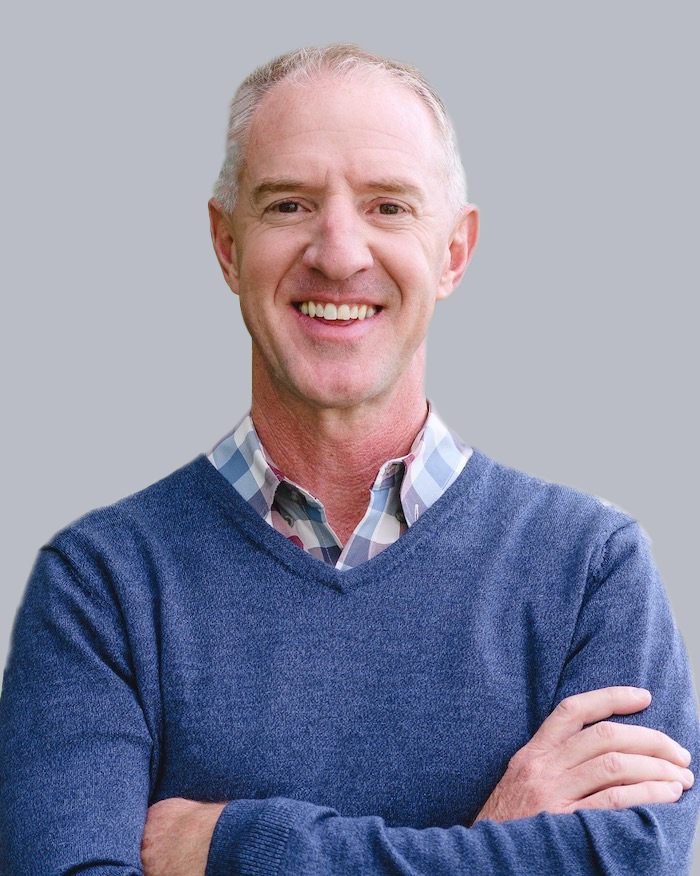
Dave Chase is a Director at Amplēo. He is currently taking a sabbatical to move with his family to Chicago for a service opportunity. This will take him away from Amplēo for three years. He intends to return to Amplēo at the end of this assignment in July 2025.
Before becoming a Partner at Amplēo in 2011, Dave spent 9 years in various financial strategy roles such as divisional CFO at Honeywell International Inc in their Phoenix and New York offices. In 2007, Dave became the CFO, and ultimately the Consumer Division Executive VP, for Cricut, a large private equity-owned company in consumer products manufacturing, distributing, and retailing. Dave has led or been instrumental in raising multiple rounds of equity and debt in excess of $500 million. After a successful career, Dave has used his broad experience in global finance and strategy to assist Amplēo clients. Dave is active in the entrepreneurial and small business mentoring community in Utah and is a frequent speaker on finance and entrepreneurship.
Fun Facts/Hobbies
- Wakeboarding
- Snowboarding
- Ski-mountaineering
- Hiking
- Passion for humanitarian work
Education/Certificates
- MBA from Brigham Young University
Share
Table of Contents



