






Finance

Insights
Finance Insights and Resources
Practical guidance for building the financial function your business needs, from fractional CFOs who've done the work: cash flow, forecasting, raising capital, and the numbers that drive better decisions.


What Character Traits a CEO wants from their CFO
Hello. My name is Dave C. I…am a CFO. That’s what I do well. I fancy myself as meriting a few other monikers like Strategist, Leader, and Adrenaline Junkie. Are these appropriate qualities for a CFO? If so, am I focused on the right output the CEO and the business need to thrive? Recently we asked our top CEO clients what information THEY want from their CFO. 130 of them eagerly responded, anxious to let us know what output they value from their CFO and the character traits they expected them to have.
What CEOs Expect from their CFOs
1. Accurate, reliable, and timely financial statements
It shouldn’t come as a surprise for a CFO that number one is accurate, reliable, and timely financial statements. Years ago when I got my first shot at the CFO role I read a Deloitte & Touche pamphlet that should have been entitled, “Training wheels for the CFO”, but was actually called, “Breathing Lessons.” They agreed with the CEO and labeled solid financial statements as the “dial tone”. Frankly, without it nothing else a finance team does really matters.
2. Cash Flow Forecast
Secondly, our CEOs wanted a good Cash Flow Forecast. Note I didn’t say, “Cash Flow Statement.” Very few senior financial personnel would have ranked this #2. They’d have ranked it as important, but #2?…not likely. Too many of us focus on the income statement and the balance sheet and forget about cash flow. To use my mother’s words, “Shame. Shame.”
3. Budget to Actual Comparisons
4. Key Metrics
Take note that three of the four explicitly (and truth be told, all four in reality) require analysis. CEOs fully expect that we interpret the information we are feeding the organization.
And the fact that the other work we do is much lower in the rankings doesn’t mean that it is irrelevant. A more proper interpretation would be that without these four deliverables, we aren’t delivering the basics of what the CEO wants from us.
Character Traits a CEO wants from their CFO
I’m glad to hear that Honesty places high enough above all others that it is clearly the winner. Headlines these past few years have led me to wonder how much people really value this timeless trait.
I interpreted from their #2 ranked trait, Attention to Detail, that they didn’t necessarily want us buried in the details, but rather, they were saying, “Please don’t miss something important because you’re flying too high.”
The third most valued trait was being a Strategic Thinker. It wasn’t long ago that few people expected the CFO to think about much more than the numbers. This has very clearly changed. The CFO must contemplate what the numbers mean and relate them to the ongoing operations and strategy of the organization as much as they focus on their accuracy.
Our request to our CEO clients was a forced ranking. Don’t make the mistake of believing that the remaining 9 traits are low in importance. On the contrary, they cannot be neglected either. Consciously devoting a little time to develop in all these key areas will make you a stronger CFO.

Bootstrapping isn’t Dead
While lending is easing again, the lessons and reminders from a difficult borrowing environment these past few years should be remembered. Savvy entrepreneurs realize that the most readily available and cheapest sources of capital are to be found inside their businesses…aka “bootstrapping”. Finding, developing strategies for, and managing wisely the cash already in your business can carry you through difficult periods in your business driven by either constriction or growth.
In short, these strategies usually amount to the following:
- Actively managing the collection of the cash owed to you by customers, rather than passively letting it come in
- Minimizing the amount of inventory you carry
- Carefully analyze and control the payments you make to your vendors
Each of these very general strategies has many options to consider, but some are more impactful than others.
The available information on the internet to help educate entrepreneurs on the strategies to manage their cash for growth is almost endless. Nevertheless, here is a source that holds a tremendous repository of articles to help guide entrepreneurs to manage their cash on Inc.com.

Understanding the Basics of Loan Covenants
Understanding the purpose of covenants and which are common or expected is the key to securing the most favorable covenants you can when you negotiate your company loan. Below are common questions we hear and a listing of the common covenants we’ve observed in the market recently.
What are loan covenants and why is the bank asking me for them?
When banks loan companies money, they want assurances that they’ll be paid back. And you, as a company, want assurances that when you commit to a purchase of inventory or equipment, for example, the funds will be there.
Banks are primarily finished with their commitments when they give you the money. You, on the other hand, have a lot to do, or in some cases, not to do. The assurances your company will make to the bank are referred to as “covenants.”
Types of Common Loan Covenants
There are as many different covenants as there are banks. The three categorical covenants listed below, along with examples, are those we are seeing as the most common in the market today.
Affirmative Covenants
These are used to remind the borrower that there are certain actions they should be taking to ensure the long-term health of their business. Many of these are intuitive and natural but are meant to be triggers for warnings to the bank if not performed. These include:
- Operational Covenants like keeping compliant with GAAP, paying taxes timely & complying with stated laws.
- Reporting Covenants like quarterly financial statements and annual audits…each of which should be performed in a proscribed time frame.
Negative Covenants
Banks use these to create boundaries for owners and the company. The goal is to keep the company from radically reducing the underlying company value or its ability to pay the bank back. These usually include most of the following:
- Investment – limiting non-standard purchases, E.g. mergers/acquisitions, without bank approval
- Asset Sale – restricting the sale of valuable assets outside of the “ordinary course of business”
- Cash Payout – preventing distributions to owners or other shareholders
- Financing – limiting additional indebtedness of any kind without prior bank approval
Financial Covenants
These covenants are based on the specific balance sheet or income statement items or ratios of those items. The ratios are generally set according to how the business said it’d perform (via projections provided to the bank by the company during negotiations). Then they are used to measure how the business lives up to its performance commitments. They may also be used to restrict the amount of available funds to borrow, as in the case of a line of credit. Common covenants used here are:
- Borrowing Base. Usually applied to lines of credit, this is usually defined as a portion (often between 50-75%) of “eligible Accounts Receivable plus a portion (often between 30-50%) of “eligible inventory”. Here, the goal of the bank is to be assured they’re loaning less than what they could liquidate AR and inventory for, if necessary.
- Interest Coverage Ratio. This ratio is always higher than 1, is typically 1.5-2.5, and may move up over the life of the loan. It is defined as Annual EBITDA / Annual Interest Expense. Banks prefer this ratio to test whether current year earnings are in excess of current year interest expense.
- Debt Service Coverage Ratio. Typically the same as Interest Coverage Ratio, but the denominator includes other debt items such as the Current Portion of Long Term Debt.
Why is it important for me to monitor them?
If one of your covenants is violated, or “tripped”, the banks can declare the company in default which usually results in a formal letter of default from the bank.
However, if you’re doing a proper job monitoring your covenant compliance, see a potential “trip” coming, AND make the bank aware in advance, they are far more likely to react cooperatively.
But if the day does come that you receive a letter of default, don’t let this cause a panic attack because it is usually coupled with a solution offered by your bank. Your bank is generally willing to work with your company because they want to give themselves the greatest chance they’ll collect their debt …and that usually comes from cooperation rather than immediately calling the loan. Frequently, these solutions will already be spelled out by the “remedies” in the agreement. Other actions may include, in order of most to least frequently enacted:
- Increasing the interest rate to the “default rate”
- Ceasing to advance new funds
- Prohibiting distributions to subordinated debt (debt lower in priority than theirs)
- Calling the loan (asking for full repayment)
- Repossessing collateral
- Legal action against the borrower
Banks can be wonderful partners as you grow your business. But as partners, they should be treated equitably. If you have a loan, the more you monitor and understand your covenants, the better your relationship and cooperation will be with the bank. Be sure to ask the right questions of your CFO or controller to see that they’re monitoring these properly.

Trend Analysis
Trend analysis is a critical, and all too often overlooked, element of understanding what is happening in one’s business. Far too often we see that companies are looking only at the unformatted, current period financial statements. By doing so, they are missing a valuable opportunity to be educated by their financials statements about the current period performance, but also the likely near-term performance of their business.
Business cycles vary widely by industry, but typically, a one-year look by month (graphically where possible) at the key financial metrics of a business is ideal. Identifying the key financial metrics to measure is a critical step as well that shouldn’t be glossed over. In addition to a one-year look, a more detailed trend analysis of the past 3 months and a comparison to the same period from the prior year are two other great comparators and teachers. Below are some examples:
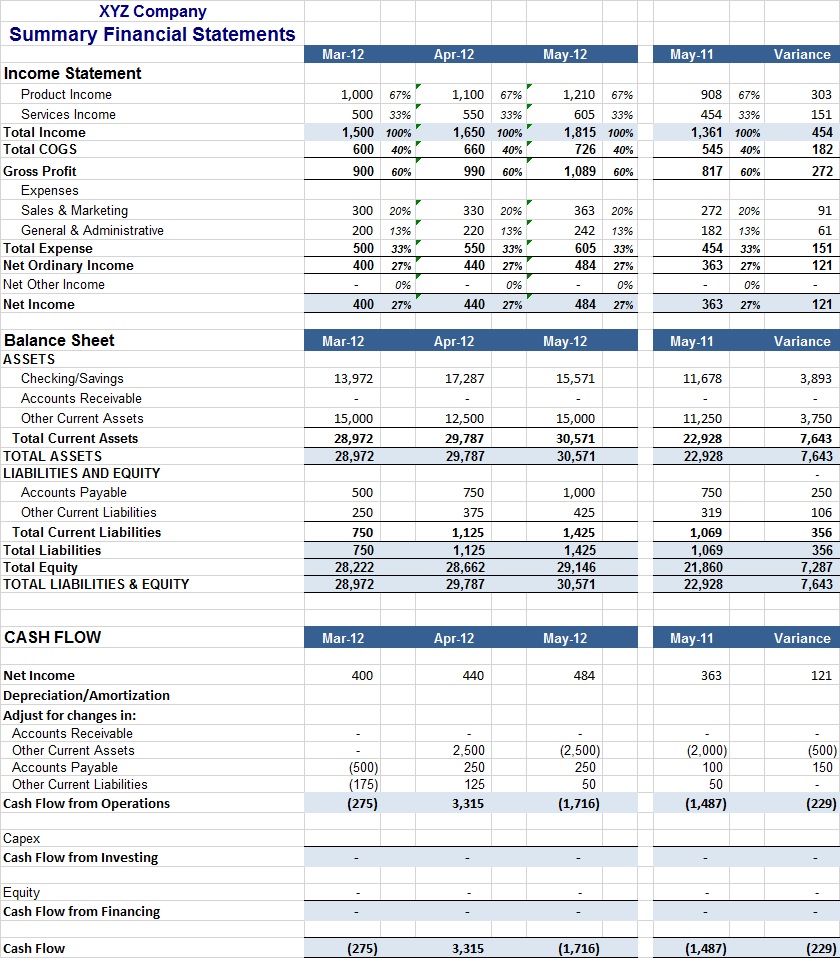
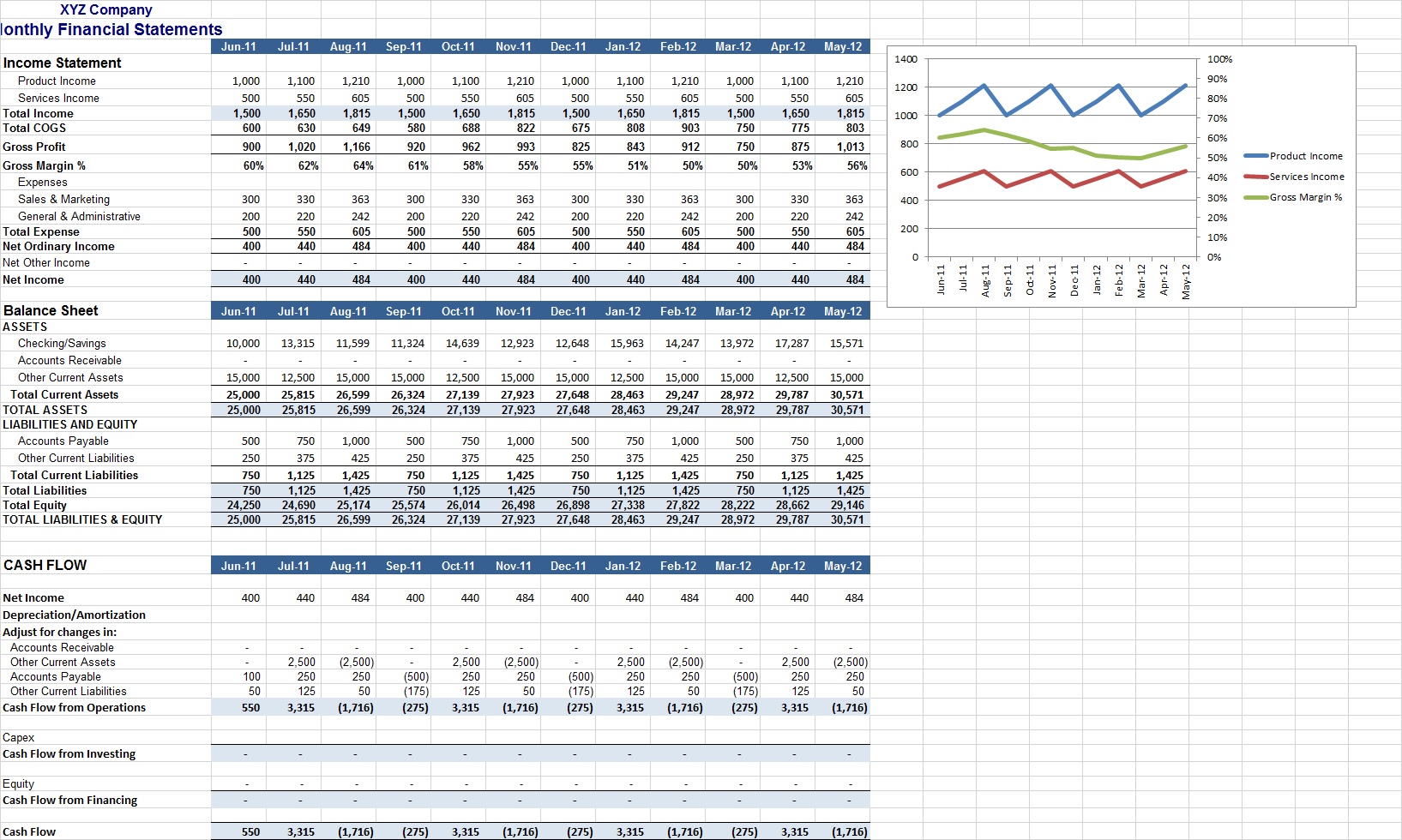
There are many ways to accomplish and view these trends including: reporting software packages (local or in the cloud), accounting software, or simply excel, to name a few. Some are better than others, but as long as you’re looking at the data in the right way, you’re learning. Here is a brief but helpful ehow.com treatise on the subject.

4 Reasons You Know You Need a New Accountant
Financial statements have high value when they are timely and accurate and when they are presented in such a way as to lead to good decision-making. The ROI of any investment, including producing those statements, is clearly increased when the cost to produce them is reduced. Your accountant holds the keys to the value you are getting out of your investment in financial statements. How do you know whether they are truly performing or whether it is time to find a new accountant?
Ask yourself the following questions.
Timely Financial Statements
Begin by asking yourself if you are constantly asking for reports that weren’t delivered when promised. There are always a million reasons why reports might be late. Your accountant may try to put the blame on faulty processes, bad information, or even you in some way. There are no good reasons why accounting transactions can’t be maintained in nearly real-time. If your accountant isn’t making progress or can’t figure out how to work around the obstacles that stand in the way of timely financial statements, it’s time for a change.
Accurate & Reliable Financial Statements
Next, once you have the financials, do you have faith in them? Or rather, do you find yourself doubting their veracity? Perhaps you even find yourself asking to review the detailed financial statements to ensure all expenses are being coded properly. Rest assured, this is not the best practice. These activities are time-consuming and a waste of your valuable time. While some of this may be necessary at the beginning of your relationship with your accountant, if it is happening on an ongoing basis, it’s time for a change.
Proper Analysis
Thirdly, reflect on how often you look at a financial statement, glance at a couple of relevant numbers like gross margin and net income, and then simply set them aside until next month. Are you getting more and better information than this? A good accountant is regularly digging deeper into WHY things are happening. They review trends and analyze sales and costs by channel, segment, region, customer, etc. Their purpose is to seek and understand the drivers of success or failure. In turn, they should be presenting those learnings to you in ways that lead to good decision-making. If your accountant is leaving this kind of analysis up to you, it’s time for a change!
Streamlining Technologies
Finally, ask yourself if your accountant is keeping up with the latest technologies and ways of automating transaction processing. Frequently even good accountants get busy and get stuck in the ruts of doing things the way they were done last month. There are so many new low-cost accounting systems that make it easy to integrate with outside data sources (such as banks, merchant processors, website shopping carts, EDI data sources, CRMs, etc.) that a little investment now could cut down on manual processing substantially. Is your accountant standing in the way of making these changes happen? If so, it’s time for a change!

Too Many Spreadsheets – Is your company in trouble and you just don’t know it yet?
I met with the management team of a client yesterday that we have been working with for about two months. Initially, we performed an assessment of their accounting personnel and procedures, prepared a short-term cash flow forecast, and advised them on modeling and securing the financing for their expansion plans. During our work, we found an overworked controller who had allowed himself to get caught up in the activities of “accounting” and, as a result, had not done a good job of designing good procedures or controls or learning the Company’s ERP (Enterprise Resource Planning) system well enough to set it up and use it to its fullest capacity. We found that he and the company’s accountant had created several “manual work-rounds” and used over 20 individual spreadsheets to track, manipulate, manage and process transactions that could and should be done within the ERP system.
The work of the accounting department was, in fact, eventually getting done each month and usually with reasonable accuracy so you might ask, “what’s the problem?” Well, there are problems here – major problems – please allow me to explain just three.
Wasting time making sure information is accurate
First, the controller has been spending 12 – 15 hours per day in the “weeds” of the company’s accounting. He is so preoccupied with details, transactions, and making sure that the information is accurate that he has not spent time:
- Building an infrastructure that will scale with the company’s planned growth, as a result, his only solution for managing increasing transaction volume is to add people to follow the flawed procedures now in place. Increasing volume in this situation will lead to errors and breakdowns that could have a major impact on the Company’s ability to process and invoice orders correctly and to manage and collect customer accounts receivable.
- Analyzing & understanding the Company’s results because the systems & procedures were not set up to capture and report important profitability or contribution margin information (e.g., by customer, product, channel, etc.). As a result, any reporting and analysis take hours because the controller has to export data to Excel and perform time-consuming manipulation of the data each time it is completed and he rarely has time to do this.
Transaction and processing transparency is non-existent
Second, any information that is stored and managed in MS Excel, is, by definition not in the ERP system and, therefore, is not available to anyone who does not have access to the spreadsheet(s). As a result, transaction and processing transparency is non-existent – this increases the potential for fraud or theft and means that potentially critical information is hidden from those who most need to know that it exists and who could best determine what it really means to the company and/or its customers. This means that decisions are likely being made without the benefit of information that may change the ultimate decision if management had access to the data and could properly analyze it.
Spreadsheets are easily susceptible to errors
Third, MS Excel spreadsheets are easily susceptible to errors – intentional or unintentional and typically no one is auditing the spreadsheet in sufficient detail to uncover the error(s). A recent study by the Institute of Internal Auditors found error rates from 45% to more than 90%. In addition, when KPMG Management Consulting audited spreadsheets from over 21 major UK banking and financial organizations, they found that 92% of the spreadsheets dealing with tax issues had significant errors, 75% had significant accounting errors, and 59% were judged to have a poor design. If your company’s spreadsheets have errors (and they undoubtedly do), you may be making decisions based on flawed information and analyses.
I have worked with companies with more than $100 million in annual revenue who have these exact problems – they have called for help because the accounting “house of cards” will eventually fall under its own weight and that is not a pretty sight – it can destroy your business! These problems are not difficult to resolve when approached with the right knowledge and expertise. If any of this sound familiar to you, please don’t ignore the reality, you need to take charge and demand changes – now! Reach out to Ampleo for help.

What is Your Strategy?
Many people believe that a mission statement is a strategy. Let’s not beat around the bush…it is not. A strategy governs how a company is going to reach its Big Hairy Audacious Goals. For instance, are you a low-cost leader, or are you different enough that you can charge a higher price than your competition? Your strategy is your high-level path to achieving your goals.
Nearly 10 years ago W. Chan Kim and Renee Mauborgne wrote a fantastic book called Blue Ocean Strategy. They talk about how so many companies are trying to fight competition in a competitive ocean. Companies fight over price, market share, and customers. The fight becomes very bloody and the “competitive” ocean becomes very red with blood very quickly. They suggest that the best strategy is to create an idea that has very little competition. Companies can succeed by not battling competitors, but rather by creating ″blue oceans″ of uncontested market space. They assert that these strategic moves create a leap in value for the company, its buyers, and its employees while unlocking new demand and making the competition irrelevant. The strategy sounds great, but it isn’t so easy to implement. You may already be in a blue ocean, but don’t know how to grow your business. You may be in a red ocean, but have a new idea that is in a blue ocean and you don’t have the money or the organization to get to the blue ocean. Money will ultimately follow good ideas, but good ideas have to be led by strong management with the experience and the fortitude to see the idea through to that blue ocean.
If you believe you are in a red ocean, how should you compete? How do you create a blue ocean strategy? Ask yourself: Do I have the ability to create something that is valuable, rare, difficult to imitate, and have the organization to manage that new idea? Many companies have something valuable and or rare, but it is easily duplicated or simply doesn’t have the management organization to take the company to the next level. As our founding partner, Kent Thomas has said many times, you need to know what you don’t know. If, for example, you don’t have a management team, you must bring in the right talent to help you execute. So, part of your strategy setting is to look for a Blue Ocean or a space to create one. But it also includes how you intend to implement the strategy.
Your strategy is your all-encompassing plan to achieve your goals. It is the goal and the path. This is true whether your goal is a blue ocean, to be a low-price leader, to own a large portion of the market, or to exploit some point of differentiation where you can charge a premium. As the leader of your company, ensure your team is spending adequate time determining where you want to be (your goal), whether you can reach it via a blue ocean strategy or more effectively competing in a red ocean, and your path to reach the goal.

Does Your Company Have & Use the “Right” Technology?
A recent survey by CFO Research and Big 4 accounting firm KPMG revealed that “nearly 40 percent [of those participating] reported that their existing information systems could not support analysis of financial and performance information well. Further, they admitted that the financial and performance information that management uses for decision making is not as accurate as it could be.”
At Ampleo, our experience with existing and prior clients supports these findings. In fact, historically small businesses have not had access to the kind of technology that they needed in order to get access to timely and accurate financial and operational information so that management could make decisions based on good information. This has primarily been due to the sheer cost and difficulty of implementing enterprise resource management (ERP) systems that could provide it to them. In addition, most small businesses don’t have the kind of financial expertise to really analyze and understand the information or to marry it with critical operational data to create measures of their company’s critical success factors or key performance indicators.
Fortunately, that is no longer the case! Technology is affordable and more great new software, features and apps are being introduced all the time. Now the smallest companies can have a robust ERP system with complementary and integrated “add-on” web-based apps that provide excellent workflows and improved controls over information and assets. In addition, if a company has competent finance staff, documented procedures, and well-conceived controls, it can generate a dashboard of key metrics that provide real-time (or near real-time) feedback for owners and managers to monitor and utilize for decision-making.
The other critical element that still eludes many small businesses is having a sufficient budget to build a finance team with the expertise to provide strategic value to management (i.e., someone to interpret the data, help management understand what it means, and provide suggestions on how to fix problems or take advantage of opportunities). This too is now available to and affordable for small businesses since the process of outsourcing controller and CFO-level services has come of age.
In the survey, the majority of respondents were interested in technologies that would boost their insight into the company’s performance. If you have a need for better systems resulting in better information flow, don’t wait any longer. Begin by exploring some new technologies that can open your mind to what is possible such as Tableau, Expensify, and Bill.com, all of which are easily integrated with most financial systems.

Are your Financials “Investor Ready”?
Frequently we receive calls from entrepreneurs and CEOs telling us they would like assistance in preparing to jump into the financial markets and seek outside funding, whether from banks or other investors. Over the years we have noticed common errors in their historical financials when we initially review them. Those listed below are the most common. Not having crisp financials won’t necessarily scuttle a deal for an equity investor, but likely will cause them to offer you less value for the business, and will often cause a bank to be less aggressive in wanting to provide funding. Mark Ludwig, Managing Director at Sorenson Capital , suggested that “the more of these issues I find, the less confident I am in the financials.” That lack of confidence leads to lower valuations among financial investors.
These common errors fall into 4 camps: One, Generally Accepted Accounting Principles compliance. Two, proper financial controls. Three, whether the financials provide truly relevant information. Four, the lack of a cash flow statement.
GAAP Compliance
- Hybrid Cash and Accrual Accounting : Financials are a hybrid of cash and accrual accounting.
- Improper Revenue Recognition : Certainly relevant to others, but common among software companies, revenue is often not recognized properly. Generally, this means you have recognized revenue before you have fully completed the tasks for which you are being paid.
- Capital Expenses are not Capitalized : Some expenditures are for products that have value to your business beyond one year. These typically should be capital expenses. Often companies are expensing them immediately through the income statement rather than capitalizing them and amortizing them over the life of the asset.
- Accrual Management : Accruals can be manipulated to manage earnings. You can TRY to be cute with them, but these inappropriate adjustments always become transparent.
Proper Financial Controls
- Balance Sheet Accounts not reconciled : The surest way to gain confidence in your financial statement is to expect and demand 100% reconciliation of your balance sheet accounts. Demand a REAL reconciliation, not just a ledger of activity in the account…sometimes called a “roll-forward”. You want to prove logically that each account balance is appropriate… every month .
- Lack of Controls and Systems: this one can be quite broad, but having proper systems and controls around business processes gives investors confidence that the data is right…without them, financials are called into question.
- Personal Expenses : Just keep them out of the business financials…period.
- Inventory Inaccuracies : If your company carries inventory, without a concerted effort and real focus, most likely you will have inaccuracies. Unless “graded on the curve”, very few companies would receive an “A” grade on the quality of their inventory management systems and processes.
Relevance of Financials
- Improperly recording Cost of Sales : Understanding true gross margin is an early quest of all investors. When some costs are inappropriately included/excluded, gross margins are misstated.
- Lack of Segment Information : Properly managing financial data for channels and cost centers, which enables profitability by segment is crucial not only for you the entrepreneur but for any financial investor.
Cash Flow Statement
- Lack of a Cash Flow Statement : Without a cash flow statement how can you articulate where your cash has gone? And even more importantly, how will you be able to tell an investor where it will go? Without this knowledge, you can’t speak with credibility about how much you need, when you need it, and what it will be used for.
While too many businesses make these common errors, the good news is that they all can be resolved with a little planning and work. In the event there are anomalies in the financials that you may feel are warts, be prepared to talk about them early, openly, and honestly. This step alone will grant you credibility with a potential investor.
And if you find yourself a little overwhelmed by all this, give us a call and we can provide a free assessment of your financial health with some recommended paths forward.

What is Keeping Your CFO Up at Night?
We recently performed an informal survey of CFOs that we work with regarding the things they worry about most for their company. The results were not surprising. The size of the company didn’t seem to matter, the concerns are the same. Below are the top 5 items of concern and the percentage of CFOs who mentioned them in the survey.
- Cash Flow 7 of every 10 respondents
- Talent Development 5 of 10 respondents
- Right Numbers and Accurate Reporting 4 of 10 respondents
- Shareholder Value Strategies 4 of 10 respondents
- Financial Controls 4 of 10 respondents
Cash Flow
The majority of CFOs worry about the company’s cash flow. Running out of cash is their biggest nightmare. Many companies have a yearly cash forecast built up by month, but also supplement it with a 13-week cash flow projection. Some of the things they’re doing to help them manage cash are: expanding lines of credit and other debt facilities and managing accounts receivable and accounts payable days outstanding to order to speed up the cash flow cycle. Additionally, many with companies in the start-up and growth stages are always working on their next round of funding to insure the company won’t run out of money.
Talent Management
Capable CFOs are concerned about hiring the right financial people and more importantly, retaining them. Finding good people is always difficult and networking with peers seems to be the best way to find good people in financial circles. Retaining good people requires proper training and your CFO should be giving adequate time to this. It is important to note that there is a shortage of talent with good controllers and as a result compensation has been trending upward in order to get and keep good controllers.
“Right” Numbers and Accurate Reporting
This concern was shared by most CFOs but had two schools of thought. CFOs are always concerned about accurate reporting because decisions made by top management rely on accurate financial information. It is critical that the financial reporting system gather numbers accurately and reporting can come right out of the system. Too much reliance on Excel spreadsheets opens the information up to errors and potential problems. The second thought related to reporting the “right” or “correct” types of numbers. It is crucial to know the drivers in the business and make sure the dashboards of the company reflect those drivers. Key Performance Indicators (KPIs) have to help top management see a clear picture of the status of the company on a daily and weekly basis.
Shareholder Value Strategies
It is critical that the strategies of the Board and shareholders are communicated to the executive team and that those strategies are executed on. The CFO needs to understand what the core values of the company are and also the strategy of the company because a value is not a strategy. A strategy is a plan of action to achieve an overall aim. In order to execute a strategy, the CFO and executive team all have to be on the same page as the Board.
Financial Controls
Fraud is increasingly becoming one of the biggest concerns for your CFO. One CFO in our survey shared a statistic he’d recently heard that 5% of all revenues in small businesses are lost to fraud (Association of Certified Fraud Examiners). CFOs are concerned with both fraud detection and fraud prevention by plugging leaks into processes and procedures related to financial controls. Making sure that vendor payment responsibilities are split properly among your accounting team is the most pressing issue. Smaller companies often have one person doing too many things and technology can help provide proper controls. Larger companies frequently have transaction volume that is hard to properly monitor. Proper procedures and split duties are the answer here.
Over and above these top five concerns, there were several other concerns that were mentioned, including:
- Technology
- Risk management
- Knowing what you don’t know
- The integrity of company and staff
- Growth in revenues and margins
- Health care
- Doing more with less
The list is not all-encompassing and every CFO has his own list of items to prioritize. But you’ll know you have a good CFO if they anticipate these issues and strategize on how to overcome them while assisting to achieve the company strategies. Now, go get a good night’s sleep. There is a lot to do tomorrow.

Life-long learning – What’s Your Plan to Remain Competent?
How do you retain your competence? Perhaps it isn’t something that you think about often with the avalanche of daily meetings, emails, phone calls, and texts but it is something that every business person in the world needs to do more than think about – it is something that we all need to act on!
I am a licensed Certified Public Accountant (CPA) and in order to retain my license, I have to take 40 hours of continuing professional education every year – and be able to prove it! While that seems like a lot of time, believe me, it is not enough to keep up with all of the regulations, practices, and technological advancements that occur in my profession. Now, before you start feeling sorry for me, I assure you that CPAs are not the only profession that requires continual learning. I once read that many computer programmers’ skills learned in college are almost obsolete within five years after graduation. In a paper published in 2007, Jim Allen and Rolf van der Velden found that “the average ‘half-life’ of competencies acquired during tertiary [post-high school] education lies somewhere in the range between 10 and 15 years. . . However, over the life cycle of the occupational career, this would imply that tertiary graduates have to “renew” their competencies on a fairly regular basis during their careers. This offers clear justification for the strong emphasis that is often placed on the need for ‘life-long learning.”
This study and my experience indicate that each of us should have a plan for renewing our competencies, but perhaps just as importantly, we should develop a core of intellectual tools or skills that will never become obsolete. These skills, while not always directly related to our specific career or job, are more general in nature (e.g., analytic, problem-solving, social, leadership, and attitudinal skills) and give us the ability and judgment to actually use what we know to provide the results that our jobs or clients demand. I have found that individuals in my profession who do not develop and hone these “general skills” tend to get caught up in the “rut” of their job. They suffer from what I call “one year of experience ten times” rather than ten years of experience! As a result, while they may be able to produce accurate, basic financial reports, they struggle to provide real information that is useful to business owners and managers, thus their value to their employer or client is questionable.
A long-term, and what I believe appropriate, view of life-long learning dictates:
- That we acknowledge what we don’t know. My friend Chuck Coonradt of The Game of Work calls this “unconscious incompetence” – what a great phrase and how true! In order to know what we don’t know, we have to learn what we should know. I like to use a portion of my learning time on updating courses and general information about accounting, finance, business, and economics.
- That we use some portion of our educational budget to keep sharp and up-to-date in the areas where we most commonly practice so that there is never a question about our competency in our area of expertise.
- That we spend time learning skills that will help us in the long term. This is where learning about enabling technologies and the latest in trends and techniques allows us to take a step beyond minimal competency and advance towards “expert” status.
- That we start viewing life-long learning as an investment rather than a cost. It is an investment in our future and the return on investment is real and easily measurable over time. As I progressed through college and experienced truly great professors (they also happened to be the hardest), I stopped trying to find the easiest classes and rather sought out the best – where I could learn the most. I believe that we are wise to do the same as we learn now.
Remaining competent sounds like a lot of work doesn’t it? Well, it is, actually and that is the way life works. We cannot achieve greatness in any aspect of our lives by dedicating only the minimal amount of effort required. Beyond the confidence that we gain from knowing that we are truly competent and that we can deliver exceptional results to our clients or employers, we also receive the added personal benefit of being in greater demand and that equates to a higher value (i.e., compensation and satisfaction)!

Accounting fraud is on the rise! Is your Business at Risk?
In a recent study, PwC US found that 45% of businesses in the U.S. reported that they suffered some type of fraud in the past two years and 24 % experienced accounting fraud, typically embezzlement of some type. These numbers all represent increases over recent years – all of which should be a concern to every business owner or manager. The study also indicates that the majority (54%) of fraud is perpetrated by someone in a trusted, middle management position.
In some cases, the data suggests that the number of reported cases of fraud is increasing because businesses are detecting more cases through improved internal controls and oversight.
If you haven’t done so lately, now is a good time for owners and managers to consider the state of their fraud risk management plan. Think about your own internal controls and procedures and when the last time they were reviewed, challenged, and updated. Are you sure that someone isn’t able to commit fraud in your business without being detected? Do you have proper segregation of duties and are you using the tools and technology available to help you mitigate risk?
If this seems like a bit of a daunting task, call us and we can help. Our seasoned professionals can help you with an evaluation of your people, processes, controls, and technology and give you solid recommendations to improve your internal controls. In addition, we can help you implement them and provide ongoing oversight so that your business doesn’t become the “one in four” that discovers accounting fraud too late!