






Finance

Insights
Finance Insights and Resources
Practical guidance for building the financial function your business needs, from fractional CFOs who've done the work: cash flow, forecasting, raising capital, and the numbers that drive better decisions.


Small Business Financial Forecasting: You Need It, and Here’s Why
Running a small business is difficult and unpredictable. Business owners often feel like they’re flying blind, reacting to problems and issues that seem impossible to foresee. Believe it or not, your friends in the financial sector may have the answer. Financial forecasting can provide clarity, predictability, and structure in managing your business. But what is financial forecasting, and what can it do to improve your business?
Keep reading to learn what forecasting is, its pros and cons, and why it’s important for the future of your business.
What Is Small Business Financial Forecasting?
Financial forecasting is a data-driven prediction of the trajectory of your business and/or industry based on historical patterns and current trends. While forecasting has historically been used more often in large companies, small businesses are utilizing this method at an increasing rate to more successfully manage their operations.
As a small business owner, taking the time to create a financial forecast ensures you are better prepared to handle any obstacles that may arise and often allows you to see them coming.
There are many forecasting methods, and you’ll need to decide what works best for your specific organization or industry (again, your friends in the financial sector can help you there).
Pros and Cons of Small Business Financial Forecasting
As with anything, there are both pros and cons to creating and using a financial forecast. While we will discuss both for purposes of full disclosure, we hope it’s clear that we consider the pros to greatly outweigh the cons in this instance, and we think you will too.
Pros
1. Assistance with Future Growth
Being able to ascertain the right timing in which to grow your business and how to manage that growth, is crucial for any small business owner—and forecasting can help with that. By analyzing past and current data, you’ll have a better idea of potential fluctuations in the market (or just your general business flow) and know when it’s time to double down on expansion and when it’s better to simply maintain the status quo.
For example, a well-prepared and analyzed forecast can predict when it’s time to hire a seasonal employee or expand your inventory due to periods of higher demand throughout the year. The ability to foresee these (often seasonal) fluctuations in the market, as opposed to just reacting to them, will result in higher profits, which you can then invest back into your business.
2. Preparation for Periods of Difficulty
A financial forecast can offer many red flags and warning signs for your business operations, but potentially the most valuable are focused around cash flow. Cash flow forecasts exist almost exclusively to ensure that businesses do not run out of capital. Keeping a consistently updated cash flow forecast will warn you of periods of potential tight cash flow long before they actually occur, allowing you to pivot business operations as necessary to avoid a business owner’s worst nightmare—running out of cash.
Financial forecasting can also help with efficient inventory management, personnel management, and even project management during projected periods of slow or retracted growth. Having these opportunities to make decisions ahead of time can save you money—and even potentially save your business.
3. Improved Business Decisions
As you create and then continually update and refine your forecasts, you’ll start to notice a pattern emerging in how you run your business. Whether it’s mistakes you’ve made as a business owner or specific industry problems and threats, having a record of past mistakes and successes is valuable.
By collecting and exploring this information, and discovering what works and what doesn’t, you’ll start to make better business decisions over time. As an added bonus, your financial forecasts will also become more accurate and more useful for future decision-making. It’s a cycle of wins!
4. Increased Investor Confidence
If your organization is at the point where you’re looking for investors, or even if you are already investor-financed, having developed financial forecasts can be a powerful and persuasive tool. Forecasts will show the effort you’re putting into making the best possible decisions for your future success, and a solid budget-to-actual report will illustrate how past projections have guided your decisions as a business owner and operator. Structure, particularly financially mature structure, is a very attractive trait when courting investors.
Cons
1. Dependence on History
Because forecasts are predictions, they generally use preexisting information as their foundation. Because history rarely presents us with a complete picture of the future, this can sometimes affect the usefulness of a forecast—especially early in a company’s lifespan. For this reason, it is often wise to use forecasts more as a method for providing general direction, as opposed to a crystal ball for your business.
2. Limited Accuracy
Similar to the point made above, it’s important to note that forecasts are almost never perfectly accurate. Whether it’s due to incorrect inputs, truly unexpected turns in the market, or simply over- or under-estimating your sales numbers, it’s crucial to remember that there is no way to reliably and consistently predict the future for your business. Thus, forecasts should be seen as a tool in your management tool belt and not the gospel by which you govern your operations.
3. Time-Consuming Process
Creating forecasts can sometimes be time-consuming, and every minute counts when you’re a small business. Forecasting requires collecting and organizing a large amount of information, analyzing that information, and then laying it out in a way that’s easy for multiple people (often with different specialties and expertise) to understand. This can be a daunting task, but, when done well, pays huge dividends.
The Importance of Financial Forecasting for Small Businesses
Despite the minor disadvantages of forecasting, small businesses often greatly benefit from the added clarity and direction it provides. As summary, forecasting for small businesses is important because of it:
- Assists in the formation of long-term goals
- Communicates goals to employees and investors
- Helps predict important upcoming circumstances
- Improves business decision-making
- Mitigates risks
- Offers valuable insights
- Allows you to consistently manage cash flow
Get High-Quality Forecasts with Ampleo
Does the idea of creating financial forecasts for your small business sound overwhelming? It doesn’t have to be with Ampleo. Our professional CFOs have extensive experience with and knowledge of financial forecasting and can work with you to make your forecasting process as useful as possible for your business.
Contact Ampleo to learn more about our Fractional CFO services.
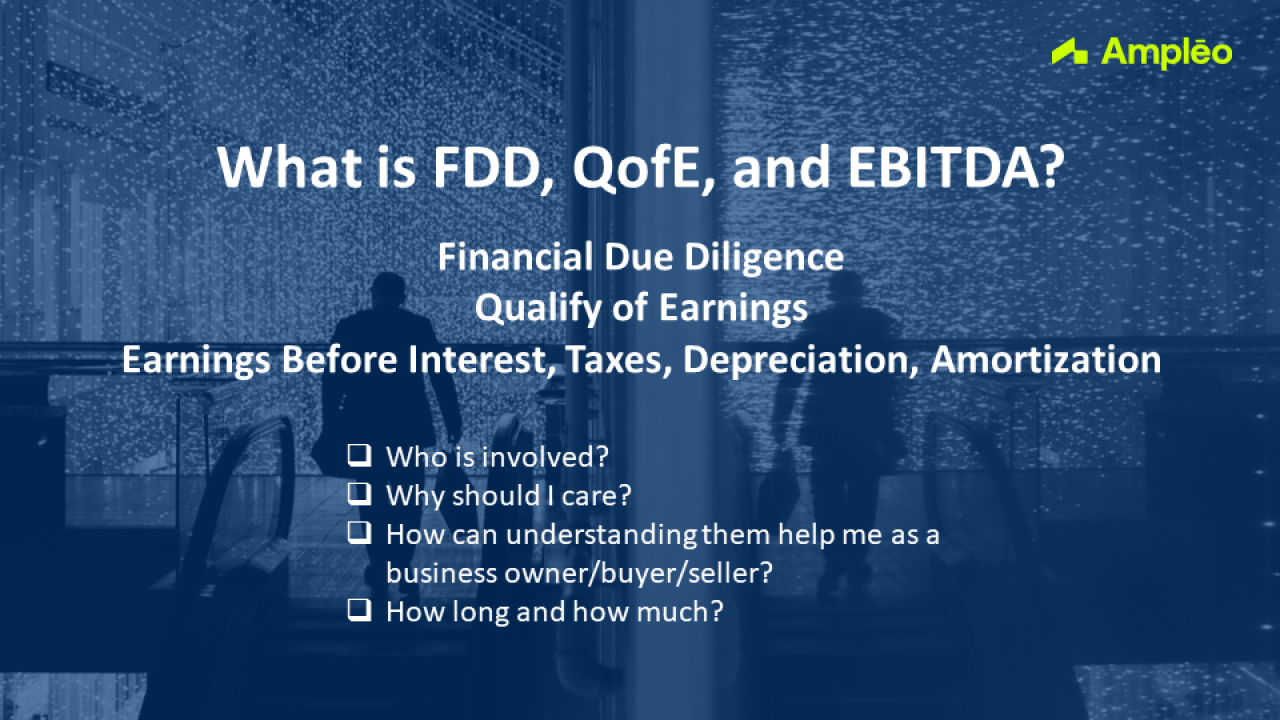
Webinar: What is FDD, QofE, and EBITDA
You may have heard of Financial Due Diligence (FDD), Quality of Earnings (QofE) reports, or EBITDA. But have you seen one? What are they? Who uses them? Why are they so important? How long do they take, and how much do they cost?
Patrick McMillan, CFO and Transaction Advisor of Ampleo will discuss these questions (and others you may have) during this event.
Fill out the form to view the webinar and download a Sample QofE Report

7 Key Benefits Of A Fractional CMO (& How Ampleo Can Help)
Are you a new start-up seeking to promote your business? Alternatively, perhaps you’ve been in business for years but are now eager to take things to the next level. In the ever-evolving landscape of business, staying ahead requires strategic thinking and effective marketing. One key role that has become indispensable for modern businesses is the Chief Marketing Officer (CMO). In this article, we’ll delve into what a CMO is, why businesses need one, and why the trend of hiring fractional CMOs is gaining momentum.
Understanding the role of a CMO
The Chief Marketing Officer (CMO) is an executive responsible for developing and executing a company’s marketing strategy. They play a pivotal role in driving brand awareness, customer engagement, and revenue growth. A CMO is essentially the architect of a company’s market presence, utilizing a mix of traditional and digital marketing channels to achieve business goals.
7 Benefits of a Fractional CMO
A fractional CMO is a part-time or project-based marketing executive who provides strategic guidance and leadership to a business. They often work remotely, providing their expertise and services as needed. Here are some of the benefits of working with a fractional CMO:
Cost-effectiveness
Hiring a full-time CMO with senior-level experience can be expensive, especially for small to medium-sized businesses. A fractional CMO offers cost savings by providing expertise on a part-time basis and can be more affordable than hiring a full-time employee.
Flexibility
Fractional CMOs work on a project-by-project or retainer basis, which allows for flexibility and scalability. This means that businesses can access their expertise as needed, without committing to a long-term contract.
Objectivity
Fractional CMOs come into a business as an outsider, which enables them to provide objective advice and recommendations. They can identify areas of improvement that may be overlooked by an internal team and offer fresh perspectives on marketing strategies.
Specialized Expertise
Fractional CMOs bring a wealth of specialized marketing expertise to the table. They have experience working with a variety of businesses and industries and can offer insights and strategies that may not be available internally.
Immediate Impact
Because fractional CMOs are experienced marketing executives, they can hit the ground running and make an immediate impact on a business. They can quickly assess a company’s marketing needs and develop a plan of action to drive growth.
Access to Resources
Fractional CMOs often have access to a network of resources and vendors that can help a business execute its marketing strategy. This can include marketing technology platforms, creative agencies, and other specialists.
Reduced Workload
A fractional CMO can take on some of the workload that would typically fall on an internal marketing team. This can free up time for internal employees to focus on other aspects of their jobs, while still ensuring that marketing efforts are being led by an experienced professional.
How Ampleo Provides Fractional CMOs:
Ampleo is at the forefront of the fractional CMO movement, connecting businesses with seasoned marketing leaders. Through a carefully curated pool of CMOs, Ampleo ensures that companies can find the right fit for their unique needs and challenges.
By using our unique part-time CMO offering, businesses can receive the same services as a full-time Chief Marketing Officer at a much lower cost and without the long-term commitment of hiring full-time. This allows businesses to invest in their marketing efforts without breaking the bank, freeing up capital for other areas within their business that require attention.
Our team of experts takes a collaborative approach to marketing, working with businesses to develop actionable strategies that drive results. We provide ongoing support and guidance throughout the process, ensuring that businesses have all the resources they need to see their marketing efforts through to success.
Why Choose Ampleo Fractional CMOs:
Vetted Experts: Ampleo ensures that all its fractional CMOs are seasoned professionals with a proven track record. This vetting process guarantees that businesses are getting the expertise they need.
Tailored Solutions: Ampleo works closely with businesses to understand their objectives and pairs them with a fractional CMO whose skills align with their specific requirements. This personalized approach ensures that every engagement is a success.
Scalability: Whether a business is just starting or looking to scale, Ampleo’s fractional CMOs can adapt to changing needs, providing a scalable solution that grows with the company.
Who Benefits Most from Our Services?
Ampleo’s services are designed to provide high-value marketing solutions for businesses with annual revenue between $5 and $50 million. Many of these businesses may not be able to afford a full-time Chief Marketing Officer or find the right leader for their stage but still require marketing expertise to grow and compete in their respective markets. That’s where our fractional chief marketing officer and fractional marketing team step in, offering top-tier expertise at a fraction of the cost. Our part-time CMO offering provides these businesses with access to a caliber of talent not readily accessible to younger companies.
Take Advantage of the Benefits of Fractional CMO with Ampleo:
Working with a fractional CMO benefits a business in many ways – it can be a cost-effective, flexible, and impactful way to drive growth and improve marketing efforts for businesses of all sizes. By providing specialized expertise, objectivity, and access to resources, a fractional CMO can help businesses achieve their marketing goals and stay competitive in today’s ever-changing business landscape.
Don’t hesitate to discover how Ampleo can help you unlock the advantages of a fractional CMO. We’re here to guide you through the process, ensuring you reap the full benefits of this dynamic approach.
Request a meeting with a CMO today and let’s move forward together!

The Role of Traditional Media in Modern Marketing Strategies
As technology continues to impact our daily lives, we often wonder if traditional media still holds its significance when it comes to modern marketing strategies. However, with the right strategy, traditional media can play a major role in amplifying a business’s reach and results in the digital world.
For businesses looking to maximize their impact, understanding how to harness the benefits of traditional media, within the context of modern marketing is essential.
Let’s explore the role of traditional media in modern marketing!
Where Traditional Media Excels
Traditional media has been a cornerstone of marketing for many years and continues to play a vital role in modern marketing strategies. Direct mail, radio commercials, billboards, magazines, and newspapers can offer a more personal touch compared to digital advertising.
This is due to the fact that, while social media and digital advertising have a broader reach, traditional media can offer a more focused approach that targets a highly specific audience. This can result in more meaningful engagement and conversions.
For example, a local newspaper may have a loyal reader base interested in local news and events. Placing an advertisement in that paper could be an effective way to reach a local audience.
Similarly, a magazine catering to a specific niche market, such as cooking or fashion, can be an excellent opportunity for businesses in those industries to target an engaged and relevant audience.
The Traditional & Digital Media Combo
Pairing traditional and digital media can be an effective way for businesses to reach a broader audience and maximize their marketing efforts.
Traditional media can help create brand awareness and build trust, while digital media offers unique targeting options, tracking capabilities, and cost-effectiveness that can improve ROI and campaign effectiveness. Combining the two allows businesses to take advantage of the strengths of each medium.
As an example, a TV advertisement can expand brand visibility to a larger audience, whereas an aimed social media promotion can stimulate conversions within a particular demographic. Similarly, a print ad in a magazine can help establish credibility and trust, while digital retargeting ads can keep the brand top-of-mind with potential customers.
At Ampleo, we believe that every business must approach their marketing mix in a customized and balanced manner to reach their target audience effectively. A tailored marketing strategy that combines traditional and digital media can offer the best of both worlds, resulting in an unbeatable combination that leads to a significant impact on conversions and ROI.
By understanding the unique strengths of each medium and how they complement each other, businesses can create a comprehensive marketing plan that yields impressive results.
Start leveraging the power of Traditional Media
In short, traditional media is still relevant in today’s digital age and is a vital component of a successful modern marketing strategy. It remains an essential channel for businesses’ growth and amplifies the brand’s message, resulting in long-term success.
Contact us today, and let our team help you harness the power of traditional media to take your business to the next level.

HR Compliance & Audits: How To Avoid Costly Mistakes
Several years ago, I had the unfortunate opportunity to learn just how critical it is to ensure that even the smallest HR onboarding tasks are done correctly. It was day two on the job, and I was called to the front lobby by the receptionist, who told me that two men with a badge were there to see me.
Not one to easily panic, I asked what they wanted, and she replied they wanted to see me. Yikes! I quickly did a recap of my life and wondered what in the world law enforcement would want to talk to me about. Coming up with nothing, I chose not to flee and instead go to the lobby to talk to these ominous visitors.
Upon meeting the two lovely gentlemen from Immigration and Customs Enforcement (ICE), they presented me with a notice for an audit and inspection of our I-9s. Thanks to great legal counsel, I was granted a 30-day extension since it was my second day on the job. However, working with counsel we discovered that we had some significant issues in the way the company completed, verified, and stored the I-9s.
What is an HR compliance audit?
An HR Compliance audit is essential for employers to ensure compliance with employment laws. It goes beyond mere compliance by verifying the accurate maintenance and secure storage of records. Small issues like missing signatures on forms or unchecked boxes can lead to significant fines or legal liabilities. The audit covers personnel files, payroll, employee handbooks, compliance with postings, and even HR functions. Specific audits delve into recruitment and hiring practices, benefits, compensation and payroll, performance evaluation, and termination processes. Additionally, a legal compliance audit scrutinizes policies and procedures to ensure adherence to federal, state, and local labor laws, such as the Family and Medical Leave Act (FMLA), Fair Labor Standards Act (FLSA), anti-discrimination and anti-harassment policies, Americans with Disabilities Act (ADA) compliance, and Immigration Reform and Control Act (IRCA) requirements. This comprehensive audit process ensures legal compliance and protects both employees and the organization.
HR and I-9 Audit Compliance: Laws, Regulations, & Industry Standards
I won’t bore you with all the details, but suffice it to say that as a result, we suffered a significant loss of key talent due to this audit and faced significant fines. I now openly admit to PTSD when it comes to the I-9 process and am a zealot for ensuring this is done correctly, and, making sure routine audits are performed to ensure HR compliance.
In the immortal words of Jerry McGuire, “help me, help you!” – that is what every People Ops leader should be saying to their organizations. In the intricate web of modern business operations, the People Operations functions serve as the backbone that supports the entire organizational structure.
As companies continue to navigate an evolving landscape of laws, regulations, and industry standards, maintaining compliance within the People function has become more vital than ever. Helping the C-Suite understand the importance of routine audits is the role of all People leaders, and this is where audits step in to play a pivotal role.
These routine audits are a proactive shield against the looming threats of substantial fines, negative impacts to company reputation, and talent attrition. By meticulously examining and fortifying your HR processes, you safeguard your organization from punitive penalties and cultivate an environment where top-tier talent is nurtured and retained.
Benefits of An HR Audit
An HR audit can be likened to a thorough health check for a company’s People Operations department. It involves a systematic review of HR policies, procedures, documentation, and practices to ensure alignment with legal requirements, ethical guidelines, and industry best practices. While it might sound like an administrative chore, auditing the People function brings forth a multitude of benefits that go beyond mere compliance.
1. Risk Mitigation:
The business environment is rife with compliance risks that can arise from anywhere, be it labor laws, workplace safety regulations, or data privacy mandates. Conducting regular People Operation audits acts as a preventive measure, identifying potential compliance gaps before they snowball into costly lawsuits, fines, or reputational damage.
2. Legal Compliance:
Legislation related to employment practices is continually evolving, and non-compliance can have dire consequences. Audits help companies stay updated with the latest laws and regulations governing areas such as hiring, firing, employee rights, and discrimination. Adhering to these laws not only safeguards the company but also fosters a positive work culture.
3. Process Optimization:
Audits shed light on inefficiencies in People Operations processes, leading to better streamlining and resource allocation. This optimization can result in improved team member experiences, as processes become more transparent, timely, and fair.
4. Data Security and Privacy:
In the digital age, protecting employee data is paramount. audits assess data management practices, ensuring that sensitive information is handled securely and in compliance with data protection regulations like GDPR or CCPA. This safeguarding not only preserves employee trust but also prevents potential legal ramifications.
5. Internal Alignment:
A People Operations audit is not just about identifying areas of improvement; it’s also about promoting consistency and alignment within the organization. By standardizing HR practices across departments and locations, audits foster a sense of unity and shared values, which can positively impact company culture.
6. Team Member Engagement:
When Team Members perceive that their workplace adheres to ethical practices and follows regulations, their trust and engagement levels tend to rise. This can lead to higher morale, increased productivity, and reduced turnover rates.
7. Strategic Decision-Making:
Auditing People Operations functions provides management with valuable insights into the company’s human capital. This information can guide strategic decisions related to workforce planning, talent acquisition, training, and development.
In the complex realm of business, People Operations form the bedrock upon which organizations thrive. By conducting regular audits, companies demonstrate their commitment to ethical practices, legal compliance, and team member well-being.
These audits not only protect against risks but also pave the way for smoother operations, enhanced employee experiences, and more strategic decision-making. As compliance requirements continue to evolve, investing in auditing the People Operations remains a cornerstone of sustainable and responsible business practices.
This is where you need the trusted experience of a seasoned professional to evaluate your processes and, identify gaps, and provide solutions to ensure compliance.
Avoid Common HR Mistakes with Fractional HR Services
Ampleo is here to help! Ampleo HR professionals are here to assist you before you need to engage outside resources to defend against costly government audit findings or labor charges. Contact Ampleo today to learn more.

Crafting a Brand for a Lasting Impression: The Power of Consistent and Unique Branding
In today’s highly competitive market, building a strong and memorable brand is essential for businesses looking to attract and retain customers. The most successful brands in the world have earned their recognition through consistent and unique delivery of messaging, values, and aesthetics over time.
In this blog post, we will explore the importance of consistent branding and how unique branding can help you stand out from the crowd. We will discuss the key elements that make up a successful and memorable brand and provide insights on how to build customer trust. Additionally, we’ll share actionable strategies for incorporating uniqueness into your branding without sacrificing consistency.
So, whether you’re just starting or looking to enhance your branding strategy, keep reading to learn how to craft a brand that leaves a lasting impression.
Consistent Branding
Building a lasting impression starts with staying consistent over time. Consistency is not just about using the same logo or color scheme; it’s about delivering on your brand promise every time a customer interacts with your business.
Customers rely on consistency from their favorite brands because it creates a sense of familiarity and trust. They know what to expect from your business, and that familiarity builds loyalty.
By delivering a consistent brand experience, you position your business as reliable and trustworthy, which in turn strengthens your relationship with your customers. Consistency also reinforces your brand’s values and messaging, ensuring that your customers understand what your business stands for.
Therefore, staying consistent over time is essential for building a strong, memorable, and trustable brand that resonates with your customers.
Adding Brand Uniqueness
With that said, building a unique brand doesn’t mean that you have to sacrifice consistency. In fact, adding uniqueness to your brand can be a fun way to make it more memorable and differentiate yourself from competitors while still staying true to your brand identity. Unique branding helps differentiate your business from the competition and establish a distinctive brand identity.
To add uniqueness to your brand, start by identifying your business’s unique selling proposition (USP). Your USP is what sets you apart from your competitors and what makes your business special. It could be your product offering, customer service, or brand story. Whatever it is, use it as a foundation to build your brand messaging and aesthetics around.
Next, consider how you can incorporate your USP into your brand’s visual identity. This could mean using distinct colors, typography, or imagery that sets your business apart from others in your industry. By creating a unique visual identity, you make it easier for customers to remember your brand and differentiate it from competitors.
Ultimately, creating a memorable and successful brand is about finding the right balance between consistency and creativity. Consistency helps customers identify and recognize your business, while creativity adds an element of excitement and uniqueness that can elevate your brand’s recognizability.
It’s essential to maintain brand consistency across all channels, including messaging, visuals, and customer experience. By doing so, you build trust and familiarity with your customers, which are crucial factors for brand loyalty.
Start Crafting Your Unique Brand Today
Are you ready to establish consistent branding and create a truly unique brand that will make a lasting impression? Ampleo is here to guide you on this exciting journey!
Our marketing executives specialize in crafting memorable brands and ensuring consistent branding across all touchpoints. Give us a call today, and let’s make your brand the first thing people think about when shopping in your industry.

Traditional Media vs. Digital Media: Unlocking Its Advantages
As technology advances, it’s easy to forget about traditional marketing channels and methods. But sometimes, they can be an effective way to reach your target audience. Traditional media, or offline media, has been a popular tool for marketers and advertisers for decades.
Keep reading to learn the benefits of traditional media and digital media, along with their differences. You’ll also learn how using the two together can convey your message better than ever.
Table of Contents
- Traditional Media vs. Digital Media
- Traditional Media
- Digital Media
- A Winning Combination: Using Both Traditional and Digital Media
Traditional Media vs. Digital Media
Before you can take advantage of the benefits of traditional media and digital media, it’s crucial to understand their differences.
Traditional Media
Traditional media refers to marketing channels that have been around for decades, such as:
- Television
- Radio
- Newspapers
- Magazines
- Billboards
- Bus shelters
- Postcards
- Direct mail
Some people may write off traditional media as dying media, but they would be wrong. There were an estimated 123.8 million TV homes in the US for the 2022-23 TV season. Additionally, people 15 years and older spent around three hours watching TV every day in 2022.
The radio may also have a larger reach than most people expect: “Radio reached 87.2% of American men between 35 and 64 and 65.1% of American women in the same age group in 2023.
Benefits of Traditional Media
Traditional media offers unique advantages that cannot be replicated with digital media alone, such as:
- Wide Reach: Traditional media can reach large and diverse audiences simultaneously.
- Credibility: Reputable outlets enhance brand credibility and build trust.
- Tangibility: Print media provides a lasting and tangible presence for brand recall.
- Local Presence: Connect businesses with the local community.
- Brand Recognition: Builds brand recognition through consistent exposure.
- Complementary to Digital: Works well when integrated with digital marketing strategies.
- Emotional Impact: Television and radio can evoke emotions through storytelling.
- Less Ad Clutter : Some traditional media formats have less advertising clutter for greater visibility.
Contact Ampleo to bring in an experienced CMO who has managed significant traditional media budgets and marketing campaigns.
Disadvantages of Traditional Media
Unfortunately, traditional media channels also come with some drawbacks.
One of the biggest disadvantages of traditional media is the high cost of producing ads, whether for television or print. For example, producing a television commercial can require a significant budget, making it difficult for smaller businesses to compete.
You also have limited control over distribution timing and ad exposure. Unlike digital ads, you lack the ability to remove or edit content in real-time at a specific moment. While the time it takes to print or air content is a factor, collaboration with distributors can help align with desired time frames.
Additionally, traditional media channels lack the targeting capabilities of digital media, making it challenging to reach specific demographics or track campaign effectiveness. There’s a reason traditional advertising is referred to as “mass media.” It reaches the masses efficiently but sometimes at the expense of hyper-targeting. You’ll be delivering your dog food ad to cat owners.
Digital Media
Digital media, also known as “new media,” refers to marketing channels delivered via the internet, such as social media, email, google ads, and podcasts. More internet users naturally lead to increased digital media marketing. In 2022, there were 313.6 million internet users and 302.25 million social media users in the US alone.
Benefits of Digital Media
These digital channels offer unique advantages traditional media cannot replicate, such as:
- Targeting: Reaching specific demographics based on location, interests, and other factors.
- Measurement: Tracking and analytics in real-time.
- Cost Effectiveness: Being cost-effective for customer acquisitions (compared to traditional).
- Flexibility : You can increase, decrease, or stop online campaigns at a moment’s notice.
- Control: You can control the timing of your ad delivery and campaigns.
- Optimization: You receive immediate feedback from your audience through their interactions with ads, allowing you to improve performance and invest in campaigns that are working well.
- Engagement: You can engage with customers directly, building relationships that can lead to increased loyalty and repeat business.
Disadvantages of Digital Media
Digital media has its cons, too. One major challenge of digital media is staying up to date with the constantly evolving technology and algorithms. Working with algorithms is crucial to stand out from the competition—which is increasingly heavy. In fact, 77% of small businesses use social media to reach consumers. Social media spending is predicted to increase to 20.3% in 2023–24 and reach 26.4% in the next five years.
Social media alone can host millions of businesses that use images, videos, ads, and posts, all vying for consumer attention. With so many marketing campaigns happening simultaneously, users can get overwhelmed and start ignoring all ads—leaving your campaign in the shadows. Around 74% of social media users think there are too many ads, and 44% find the ads irrelevant.
Utilizing the experts at Ampleo can negate some of these problems. Contact us today .
A Winning Combination : Using Both Traditional and Digital Media
Traditional and digital media can be effective on their own but when marketers use both of these avenues together in their marketing strategy to distribute their messaging, businesses can create a comprehensive advertising strategy that reaches a wider audience.
By combining the advantages of traditional media and digital media, businesses can create a cohesive and effective advertising strategy that reaches a wider range of potential customers. This helps to generate interest and establish trust, ultimately leading to greater success and growth for the business.
Ampleo can help you get your audience’s attention through multi-channel strategies— contact us today .

Lincoln Howell featured on Meet & Potatoes Podcast
M&P Ep. 222 Lincoln Howell, Ampleo
Ampleo’s CEO, Lincoln Howell, joins host Garrett Clark in a captivating conversation in this episode of Meat & Potatoes. Ampleo is a Utah-based company that specializes in offering fractional executive services tailored for startups with revenue ranging from 30M to 100M. Lincoln takes us on a journey through the remarkable genesis of Ampleo, unveils its current business model, and sheds light on Ampleo’s exciting expansion plans into marketing and HR services.
Founded in 1996, Ampleo embarked on its mission when fractional consulting was a rare concept. Drawing from a wealth of corporate finance experience, the visionary founder stepped in to demystify the numbers for startups and provide invaluable guidance on fostering growth. Fast forward to today, Ampleo has left an indelible mark, having assisted numerous companies spanning diverse industries. In the words of Lincoln Howell, “Over the last three years, clients have recognized they can get what they need from a fractional resource at a better price point without worrying about the infrastructure, overhead, and office space that clients might otherwise plan on with a full-time professional.”
Furthermore, Lincoln unveils Ampleo’s forward-looking strategy for expanding its service offerings. The company has diligently gathered feedback from its extensive roster of satisfied clients, recognizing a growing demand for expertise in marketing and human resources. To meet these evolving needs, Ampleo is venturing beyond the financial realm, assembling a team of experts with backgrounds in marketing and HR. As Lincoln states, “It’s not about the businesses, it’s about the people behind the businesses.” Join us in this episode to discover how Ampleo is revolutionizing the consulting landscape.
Listen on:



Who Needs A Fractional CMO? [7 Signs that You Need One]
Are you a small or medium-sized business struggling to keep up with your marketing efforts? Do you need expert guidance but don’t have the budget to hire a full-time Chief Marketing Officer (CMO)? If so, it might be time to consider hiring a fractional CMO.
While you might think that a CMO is only for large corporations with big marketing budgets, small and medium-sized businesses can benefit significantly from their expertise. A fractional CMO can provide executive-level guidance and strategy, without the financial burden of hiring a full-time employee. So, you may think, “how do I know I need a fractional CMO”? Here are seven signs to watch out for if you’re wondering who needs a fractional CMO.
- Declining Sales: Sales are the lifeblood of any business, and if they start to decline, it’s time to act. A fractional CMO can help you identify the root cause of the decline and develop a marketing strategy to reverse the trend.
- Inconsistent Branding: Your brand is one of the most valuable assets your company has. If it’s inconsistent or not well-defined, it can lead to confusion and lost sales and market share. A fractional CMO can provide the expertise necessary to create a cohesive brand strategy.
- Lack of Marketing Strategy: Without a well-defined marketing strategy, your marketing efforts will likely be ineffective. A fractional CMO can help you avoid committing random acts of marketing by defining your target audience and value proposition, and developing a comprehensive marketing plan that aligns with your business goals.
- No Internal Marketing Department: If your business does not have an internal marketing team, a fractional CMO can fill the gap by providing the necessary expertise to execute on marketing strategies and campaigns using external vendors and agencies.
- Limited Time or Resources: Running a business is time-consuming, and it’s easy for marketing efforts to get pushed to the back burner. A fractional CMO can step in and take on marketing responsibilities, allowing you to focus on other aspects of your business.
- Need for New Market Penetration: If your business is expanding into new markets or launching new products/services, a fractional CMO can provide the expertise needed to develop and execute an effective marketing plan that drives growth.
- Lack of Objectivity: It’s easy to become emotionally invested in your business, which can lead to biases when it comes to marketing decisions. A fractional CMO can provide an objective perspective and identify areas of opportunity for growth and improvement.
If you’ve asked yourself, “do I need a fractional CMO?”, you may want to take these signals into consideration. If you are a small or medium-sized business struggling with marketing efforts, don’t let the idea of a Chief Marketing Officer seem out of reach. A fractional CMO can provide you with the expertise and guidance necessary to achieve your marketing goals without the financial burden of hiring a full-time employee. By keeping an eye out for these seven signs, you can determine when it’s time to make the move.
At Ampleo, we offer personalized marketing solutions that are tailored to fit the unique needs of your business, while providing the flexibility and affordability of a fractional CMO.
So, if you’re ready to take your marketing efforts to the next level, contact us today and let us help you achieve your business goals.
Ampleo Ranks No. 3989 on the 2023 Inc. 5000
With Three-Year Revenue Growth of 116% Percent, Ampleo Ranks No. 3989 Among America’s Fastest-Growing Private Companies
LEHI, UT, August 15, 2023 – Inc. revealed today that Ampleo ranks No. 3989 on the 2023 Inc. 5000, its annual list of the fastest-growing private companies in America. The prestigious ranking provides a data-driven look at the most successful companies within the economy’s most dynamic segment—its independent, entrepreneurial businesses. Facebook, Chobani, Under Armour, Microsoft, Patagonia, and many other household name brands gained their first national exposure as honorees on the Inc. 5000.
“We are thrilled to be included in the Inc 5000 class of 2023,” said Ampleo CEO Lincoln Howell. “With a focus on helping other companies grow through our fractional CFO, CMO and CHRO model, it has been a privilege to witness our own rapid growth as well.”
The Inc. 5000 class of 2023 represents companies that have driven rapid revenue growth while navigating inflationary pressure, the rising costs of capital, and seemingly intractable hiring challenges. Among this year’s top 500 companies, the average median three-year revenue growth rate ticked up to an astonishing 2,238 percent. In all, this year’s Inc. 5000 companies have added 1,187,266 jobs to the economy over the past three years.
For complete results of the Inc. 5000, including company profiles and an interactive database that can be sorted by industry, location, and other criteria, go to www.inc.com/inc5000. The top 500 companies are featured in the September issue of Inc. magazine, available on newsstands beginning Tuesday, August 23.
“Running a business has only gotten harder since the end of the pandemic,” says Inc. editor-in-chief Scott Omelianuk. “To make the Inc. 5000—with the fast growth that requires—is truly an accomplishment. Inc. is thrilled to honor the companies that are building our future.”
About Ampleo
Ampleo provides business professionals, such as CFOs, CMOs, and CHROs, to companies on a fractional basis in order to help them achieve their full potential. The Ampleo model allows companies the freedom and flexibility to add highly experienced, strategic talent as they need it, without having to commit to full-time employment. It also offers talented business professionals the chance to do their best work for a range of enterprises while enjoying greater variety, flexibility, and work-life balance. Thousands of companies rely on Ampleo professionals to deliver sage direction and expert counsel at all levels of their organization. Visit ampleo.com today.
CONTACT:
Haley Stepan 801-590-7791 hstepan@ampleo.com
More about Inc. and the Inc. 5000
Methodology
Companies on the 2023 Inc. 5000 are ranked according to percentage revenue growth from 2019 to 2022. To qualify, companies must have been founded and generating revenue by March 31, 2019. They must be U.S.-based, privately held, for-profit, and independent—not subsidiaries or divisions of other companies—as of December 31, 2022. (Since then, some on the list may have gone public or been acquired.) The minimum revenue required for 2019 is $100,000; the minimum for 2022 is $2 million. As always, Inc. reserves the right to decline applicants for subjective reasons. Growth rates used to determine company rankings were calculated to four decimal places.
About Inc.
Inc. Business Media is the leading multimedia brand for entrepreneurs. Through its journalism, Inc. aims to inform, educate, and elevate the profile of our community: the risk-takers, the innovators, and the ultra-driven go-getters who are creating our future. Inc.’s award-winning work reaches more than 50 million people across a variety of channels, including events, print, digital, video, podcasts, newsletters, and social media. Its proprietary Inc. 5000 list, produced every year since 1982, analyzes company data to rank the fastest-growing privately held businesses in the United States. The recognition that comes with inclusion on this and other prestigious Inc. lists, such as Female Founders and Power Partners, gives the founders of top businesses the opportunity to engage with an exclusive community of their peers, and credibility that helps them drive sales and recruit talent. For more information, visit www.inc.com.
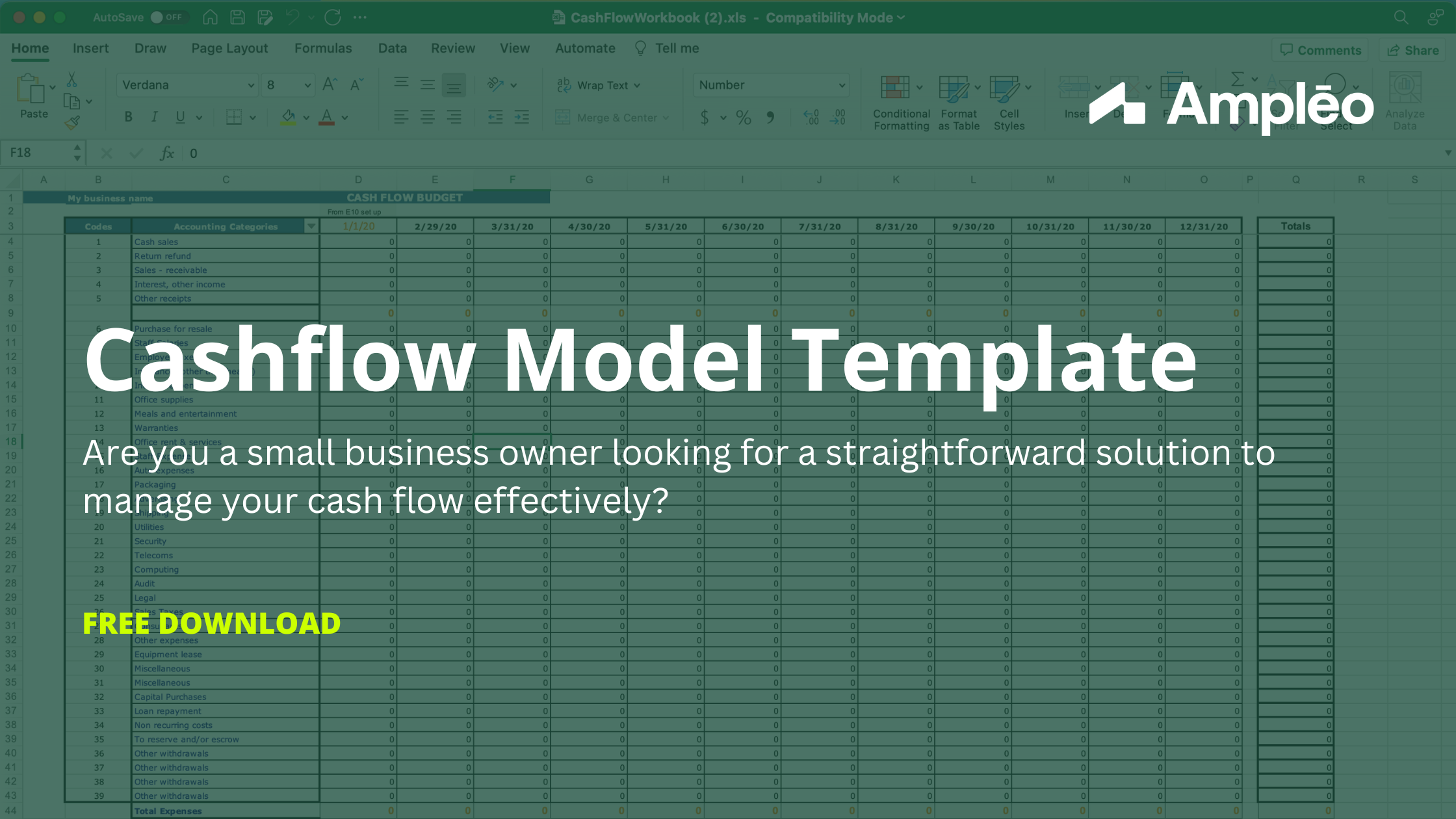
Cashflow Model Template: Simplify Your Financial Projections!
Are you a small business owner looking for a straightforward solution to manage your cash flow effectively?
A cash flow model is a crucial financial tool used by businesses to track the movement of cash in and out of their operations. It provides insights into a company’s liquidity and solvency, helping decision-makers assess the firm’s ability to meet short-term obligations and plan for future investments or expansions.
Our Cashflow Model Template is designed just for you. With minimal effort and time, you can gain valuable insights into your business’s financial health and plan for the future with confidence.
The cash flow model is typically divided into three main sections: operating activities, investing activities, and financing activities.
- Operating activities reflect the cash generated from the company’s core business operations like sales revenue, payments to suppliers, salaries, taxes, and other day-to-day expenses.
- Investing activities include cash flows from the purchase and sale of long-term assets such as property, plant, equipment, and investments in other companies.
- Financing activities encompass cash flows related to borrowing, issuing or buying back shares, and paying dividends
How to Use the Cashflow Model Template:
The template comes preformatted with easy-to-understand categories such as sales, expenses, inventory, and receivables.
Step 1: Input Your Data
Collect the necessary data. This includes the recent income statement, balance sheet, and any additional information on investment or financing activities. Simply input your relevant financial data into the designated fields.
Step 2: Calculations
Calculate the total net cash flow (operating + investing + financing) and compare it to the previous period’s balance. This gives you the closing cash balance for the current period. The template will automatically perform all the necessary calculations, giving you an accurate overview of your cash flow situation.
Step 3: Visualize Your Cash Flow
Review and analyze the updated model. Look for trends, potential issues, and opportunities. The template generates clear and concise charts and graphs, allowing you to visualize your cash flow patterns and identify potential areas for improvement.
Step 4: Make Informed Decisions
Armed with the insights from the cash flow model, you can make informed decisions to optimize your finances, manage cash reserves, and plan for any future challenges or opportunities.
Need More Complex Solutions or Expert Guidance?
While our Cashflow Model Template provides a convenient starting point, we understand that some businesses may require more comprehensive financial planning. If you need help developing a more complex cash flow model or require expert analysis of your results, contact our team at Ampleo.
Our Fractional CFO services provide you with access to experienced financial experts without the burden of hiring a full-time CFO. Our skilled professionals will work closely with you to analyze your cash flow model, interpret the data, and offer valuable recommendations for achieving your financial goals.

2 Effective Media Buying Tips [What You Need To Know]
Are you looking for ways to connect with your audience? Media buying is an effective way to grow your business by placing ads in front of interested viewers. Whether it’s through TV commercials, radio spots, newspaper ads or online platforms, media buying provides endless possibilities to reach customers.
So, let’s dive into some essential tips for media buying, how to make the most of media buying campaigns, and how to effectively connect with your target audience!
Spend Strategically
In today’s fast-paced business environment, developing a strategic approach to media buying is crucial to achieve desired marketing outcomes while balancing the cost-effectiveness of campaigns. While it may be tempting to cut back on spending, doing so could lead to ineffective campaigns that do little to benefit your business.
As such, it’s vital to ensure that your budget provides enough impressions to create a memorable impact, particularly when building brand awareness or promoting a product.
Diversifying your advertising media and layering them over time is one effective strategy for enhancing customer engagement. Combining multiple types of advertising can help reach your audience through various channels and at different times, repeatedly over time and ensure that each vehicle is working. This approach not only minimizes the risk of relying too heavily on any one channel but also allows businesses to tap into different target audiences across different modes of communication.
Investing in diversified media advertising can lead to stronger brand recognition, customer loyalty, and ultimately better business outcomes. A strategic approach to media buying that balances cost-effectiveness with desired marketing outcomes can help businesses develop effective campaigns that consistently reach their audience over time, leading to better overall results.
Get Expert Guidance
Media buying has become increasingly complex, requiring specialized expertise to deliver the best results. Partnering with an agency or experienced consultant can help businesses navigate the complexities of media buying, ensuring they invest in the right channels and creative approaches to maximize their marketing efforts.
These professionals have a wealth of experience, knowledge, and industry insights that can help businesses make informed decisions about their media buying strategy.
An experienced media expert can provide valuable insights into the latest trends, audience behavior, and advertising formats that resonate with your target audience. They can also help identify budgetary constraints and opportunities, enabling businesses to optimize their media budgets for maximum impact. By partnering with an agency or consultant, businesses can save time and money by avoiding inefficient spending on ineffective campaigns.
Ultimately, working with a media expert can help businesses achieve their desired marketing outcomes while minimizing risk, making smarter investments, and boosting their brand profile across various channels.
With the right spend and diversification, your campaigns can drive awareness that delivers real results. Look no further and contact our team at Ampleo to connect you with a fractional CMO that can help you handle your campaigns and help make a powerful impact on your target audience today!